
If you spec padel courts for a commercial venue, resort or multi-sport complex in 2026, you already know the hard math: an uncovered court loses 30% to 50% of its annual booking revenue to rain, extreme heat, snow and high wind. That’s why a properly engineered padel court roof is no longer a premium add-on — it’s the foundation of any high-return padel investment.
The biggest shift in the market right now isn’t surging demand — it’s how buyers evaluate panoramic padel court systems. Five years ago, most RFPs led with the lowest unit price. Today, the first specs serious operators and contractors vet are wind resistance rating, tempered glass safety, all-weather uptime and long-term total cost of ownership.
At LDK, we’ve built professional sports facilities for 45 years: padel courts, paddle tennis courts, indoor basketball halls, cage football pitches, squash courts and more, shipped to over 70 countries across the globe. We’ve seen this evolution play out directly on projects from desert climates to snowy European markets. In this guide, we walk through the non-negotiable priorities for roofed padel courts in 2026, break down the tradeoffs between fixed roofs and retractable roof padel court systems, and cover what to look for to avoid expensive, underbuilt solutions.
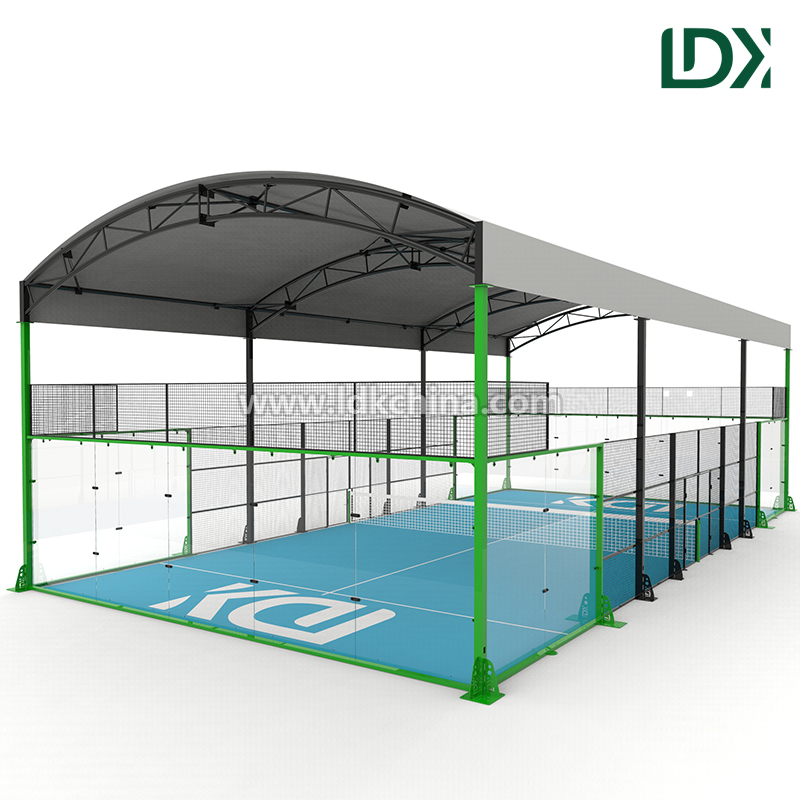
Full View Glass Custom Padel Court Super clear Glass Padel Court Hotdip Galvanized Steel Structure
Structural Wind Rating: No Longer a Bonus, But a Baseline Requirement
As padel courts roll out in more extreme environments — coastal resorts, desert cities, high-wind plains — structural failure has gone from a rare risk to one of the costliest mistakes an operator can make. We’ve seen entry-level padel court roof frames warp, bend and even collapse after a single severe storm, leaving owners with five- to six-figure repair bills and weeks of lost bookings.
That’s why in 2026, wind load rating is the first filter buyers use to narrow down suppliers. It is no longer a premium feature — it’s the baseline.
Our galvanized steel roof structure for panoramic courts is engineered to resist up to level 13 typhoons, built around a heavy arched frame that distributes wind and snow load evenly across the full system.
Crucially, all steel components go through hot-dip galvanizing after welding, then receive a electrostatic epoxy powder coat finish. This dual-layer protection stands up to salt air, high humidity, acid rain and abrasive desert sand far better than standard painted frames — which often begin rusting within three to five years.
Ultra-Clear Tempered Glass: What Makes a Panoramic Court Feel Premium
The entire point of a panoramic padel court is unobstructed sightlines, for both players on the court and spectators around it. But not all tempered glass delivers the same experience. In 2026, buyers are moving past generic “12mm glass” specs and asking two very specific questions: how clear is it, and how likely is it to spontaneously break?
Lower-grade tempered glass carries a noticeable green edge tint, distorts visibility and has a much higher self-destruction rate. For commercial venues, one spontaneous glass break means emergency replacement, forced court downtime and potential liability headaches.
LDK fits all its panoramic courts with certified safety tempered glass in 12mm thickness, cut to full-height 1990×2980mm panels for true wall-to-wall views. Our ultra-white formula has a self-destruction rate of less than 1 in 10,000 — dramatically below the industry average. The ultra-low iron content eliminates that common green cast, floods the court with natural light and creates a far more open, spacious feel.
For high-end clubs, this isn’t just an aesthetic detail. It’s a tangible difference players notice immediately, and one venues can lean into when marketing premium court time and membership tiers.
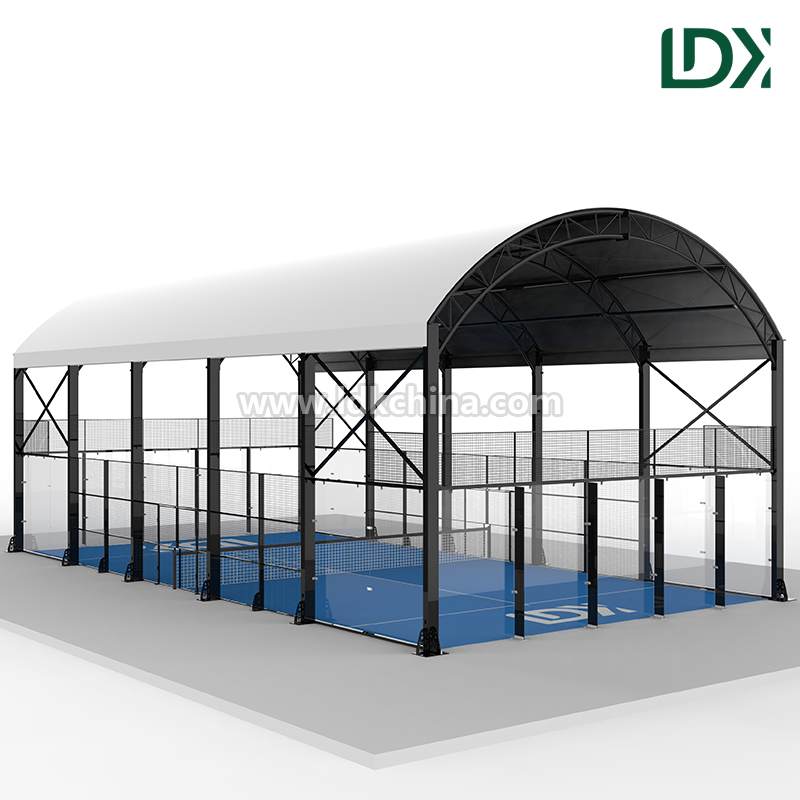
Professional Weatherproof Steel Structure Padel Court Roof for Outdoor Sports Clubs
All-Weather Playability: The Roof Feature That Directly Grows Revenue
At the end of the day, most buyers invest in a padel court roof for one straightforward reason: to stop losing revenue to bad weather.
An open-air padel court in a mild climate might see 180–220 playable days a year. Add a properly built roof, and that number jumps to 340–360. In rainy, snowy or extremely hot regions, the gap is even wider — a roof can effectively double a court’s annual revenue potential.
In 2026, two roof configurations are dominating global demand:
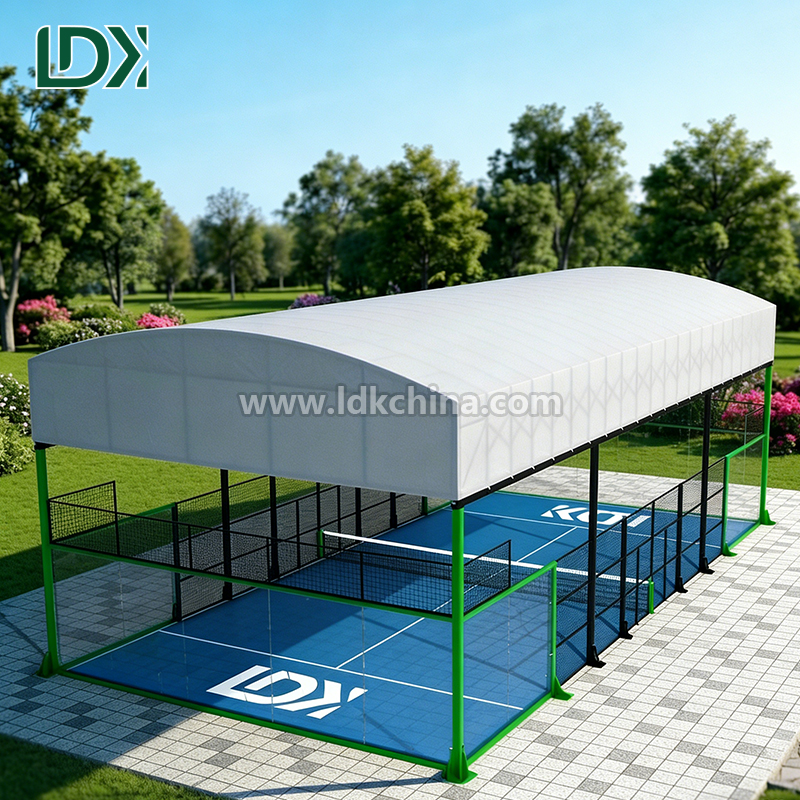
Fixed panoramic roofs remain the most popular pick for most commercial operators. Our standard system uses a double PVC-coated tent cover. It is fully waterproof, UV-stabilized and wind-tested, making it a reliable, cost-effective solution for everything from desert heat to Central European snowfall.
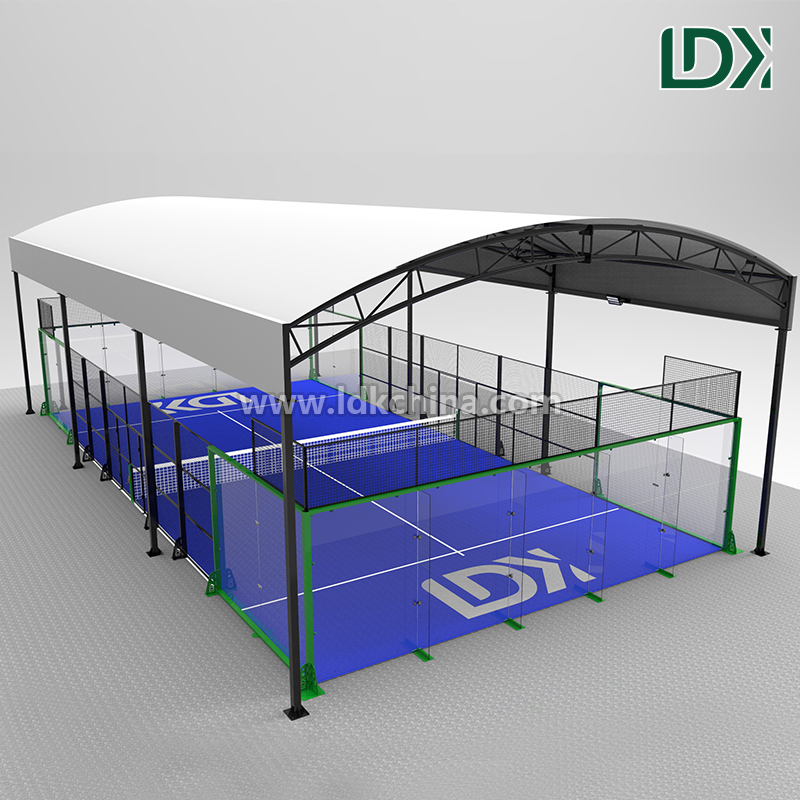
Factory Wholesale Custom Movable Outdoor Sport Events Paddle Tennis Roof Panoramic Padel Court Tent
Retractable roof padel court systems are the fastest-growing premium segment. For luxury resorts, high-end urban clubs and mixed-use leisure venues, the ability to slide the ceiling open on nice days and seal it shut at the first sign of rain or extreme heat is a massive competitive edge. It lets you sell both outdoor and indoor court experiences in one footprint, and command 20–35% higher hourly rates in the process. We design every retractable system around local climate conditions, so it operates smoothly year-round.
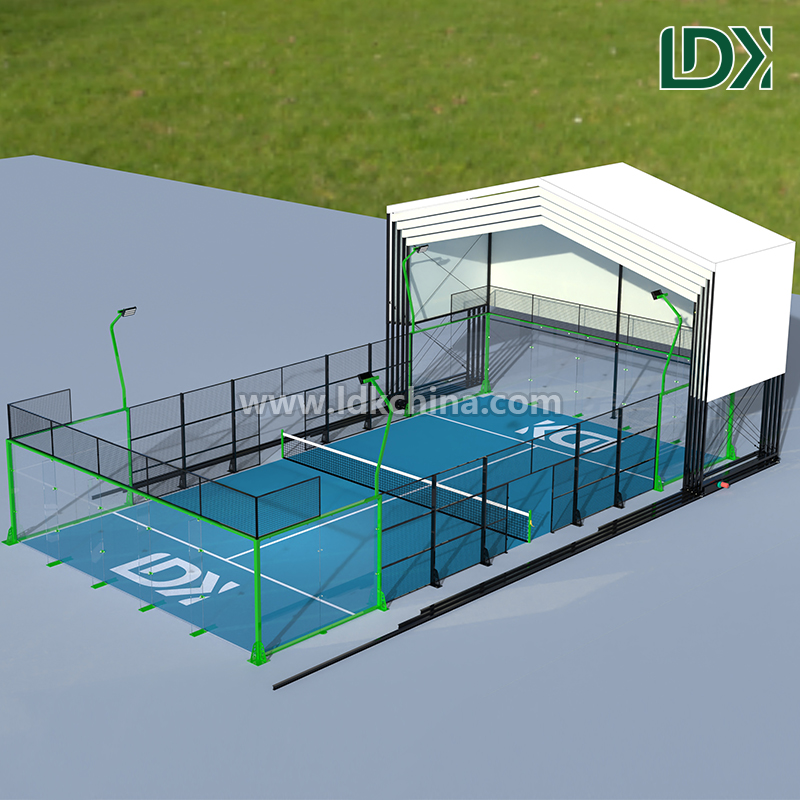
Retractable Roof System for Padel Court Motorized Cover for All Weather Sports Facility Solution
Full System Sourcing: Why Buyers Are Ditching Multi-Vendor Setups
A padel court is only as reliable as its weakest component. Five years ago, it was standard practice for buyers to source steel frames from one supplier, glass from another, and turf from a third, then attempt to piece everything together on site. More often than not, this approach led to fit issues, misaligned specifications, installation delays, and endless finger-pointing whenever a component failed down the line.
In 2026, the clear industry shift is toward single-source, turnkey court packages. Buyers want one supplier standing behind the full system — every part, from the main frame down to the smallest fastener.
As a full-spectrum sports facility manufacturer, LDK designs every element of the court to work together as one cohesive, finely tuned system. We supply competition-grade tennis post and net sets built for steady tension and long service life, paired with weather-rated LED lighting that delivers even, glare-free illumination for evening play and formal tournaments. Our purpose-built blue padel turf is engineered for consistent ball response and resilience under heavy daily foot traffic, and every project ships with a complete installation kit of corrosion-resistant hardware, protective padding and all auxiliary materials needed for a seamless build.
Everything arrives on site as one coordinated shipment, with fully compatible components and clear assembly guidance. No on-site fit surprises, no last-minute reworks, and no juggling multiple vendors to resolve issues.
Total Cost of Ownership Beats Upfront Price
If there’s one mindset shift that defines 2026 padel buyers, it’s this: they are calculating cost over 10+ years, not just the number on the initial quote.
Budget padel courts look like a great deal on paper. But three to five years in, the frame starts rusting, glass breaks repeatedly, turf mats down and roof fabric tears. By year seven, many operators are already replacing major components — spending more in repairs than they saved upfront.
We design our panoramic roof padel courts to minimize long-term ownership costs from day one. The galvanized and powder-coated frame needs no repainting for a decade or more. The ultra-white glass resists scratching and yellowing, so it stays premium-looking with only basic cleaning. And every wear component — turf, netting, roof fabric — is fully modular, so you can replace individual parts without tearing out the entire court.
For operators, that means less downtime, lower maintenance budgets and a longer usable lifespan for your investment.
Real-World Results: LDK Panoramic Padel Courts in Action
We don’t just refine our panoramic court designs on the factory floor — we test and optimize them in real-world conditions, across every climate and site type. Two recent installations demonstrate how a purpose-built outdoor panoramic padel court delivers measurable value, tailored to the unique challenges of each local environment.
Dubai
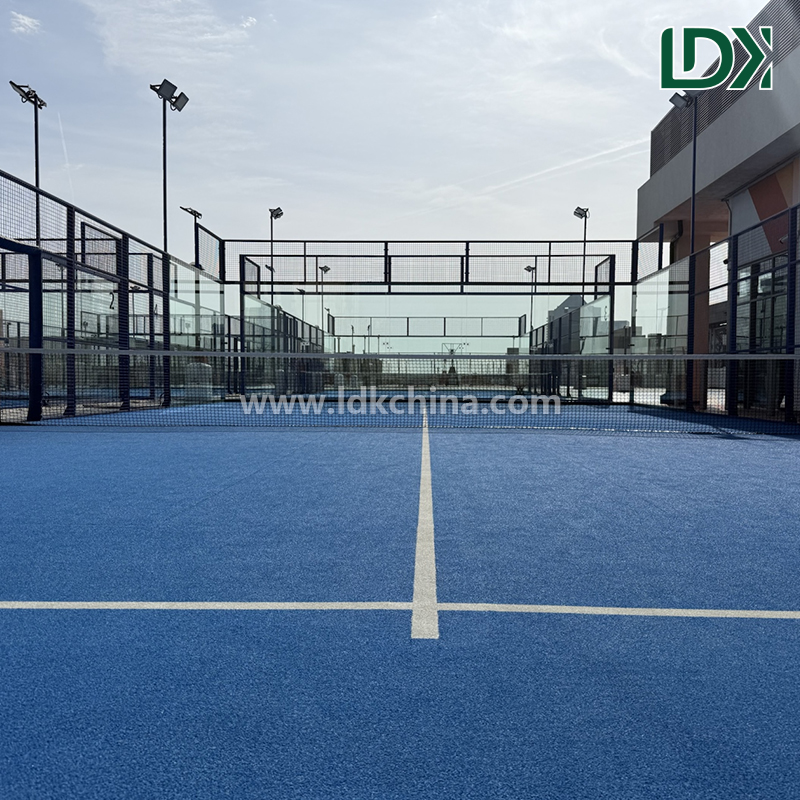
For a premium rooftop sports club in Dubai, LDK supplied panoramic padel courts engineered for desert climates. The all-glass panoramic walls deliver unobstructed sightlines, while the heavy-duty galvanized steel frame with weather-resistant finishing stands up to intense UV, high temperatures and sand dust.
Hungary
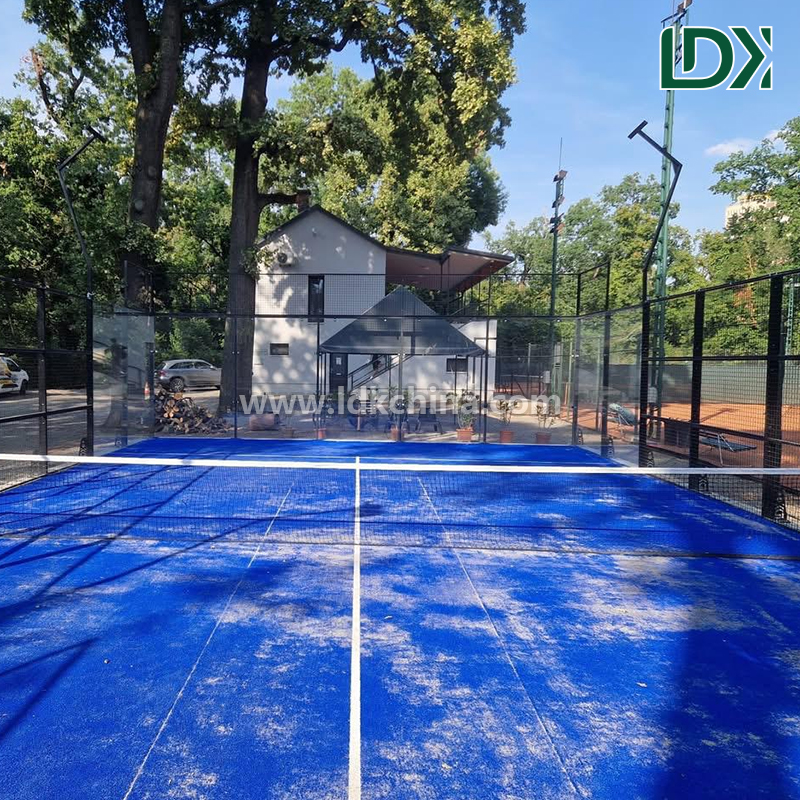
At a forest-fringed multi-sport complex in Hungary, LDK installed panoramic outdoor padel courts built to match the site’s natural setting. Full-height tempered glass walls keep the playing experience open and immersed in greenery, and the corrosion-resistant steel structure handles Central Europe’s shifting seasons reliably.
FAQ
Is padel harder than pickleball?
Yes, padel is generally considered harder and more physically demanding than pickleball. While both are easy to pick up compared to tennis, padel features a steeper learning curve due to faster ball speeds, a larger court, and the complex use of glass walls that dictate how the ball bounces.
How high does the ceiling need to be for a padel court?
For an indoor padel court, the absolute minimum roof or ceiling height is 6 meters , though the International Padel Federation (FIP) strongly recommends 8 meters for new builds and competitive play to accommodate high lobs.
Plan Your Padel Court Project With LDK
Whether you’re building a single panoramic court, adding a retractable roof padel court to an existing venue, or designing a full multi-sport complex, our engineering team can tailor a solution to fit your site, climate and budget.
Reach out to us today, and we’ll send you:
• A free custom court layout drawn for your exact site dimensions
• A transparent, line-item quotation with no hidden fees
• Our full global case study pack, including complete details on our Dubai and Hungary panoramic court projects
• Expert recommendations on roof type, glass specs and turf selection to maximize your venue’s ROI
With 45 years of manufacturing expertise and a global track record you can trust, LDK builds sports facilities that perform — year after year, in every climate.
Publisher:
Post time: Aug-18-2026


