
In recent years, with the global surge in the popularity of Padel, an increasing number of high-end clubs are striving for the ultimate fusion of aesthetics and functionality in their court designs. Full Panoramic courts—characterized by their pillar-free construction and expansive sightlines—have emerged as the preferred choice for top-tier clubs. Yet, beneath this aesthetic appeal lies a series of complex challenges in materials science and engineering.
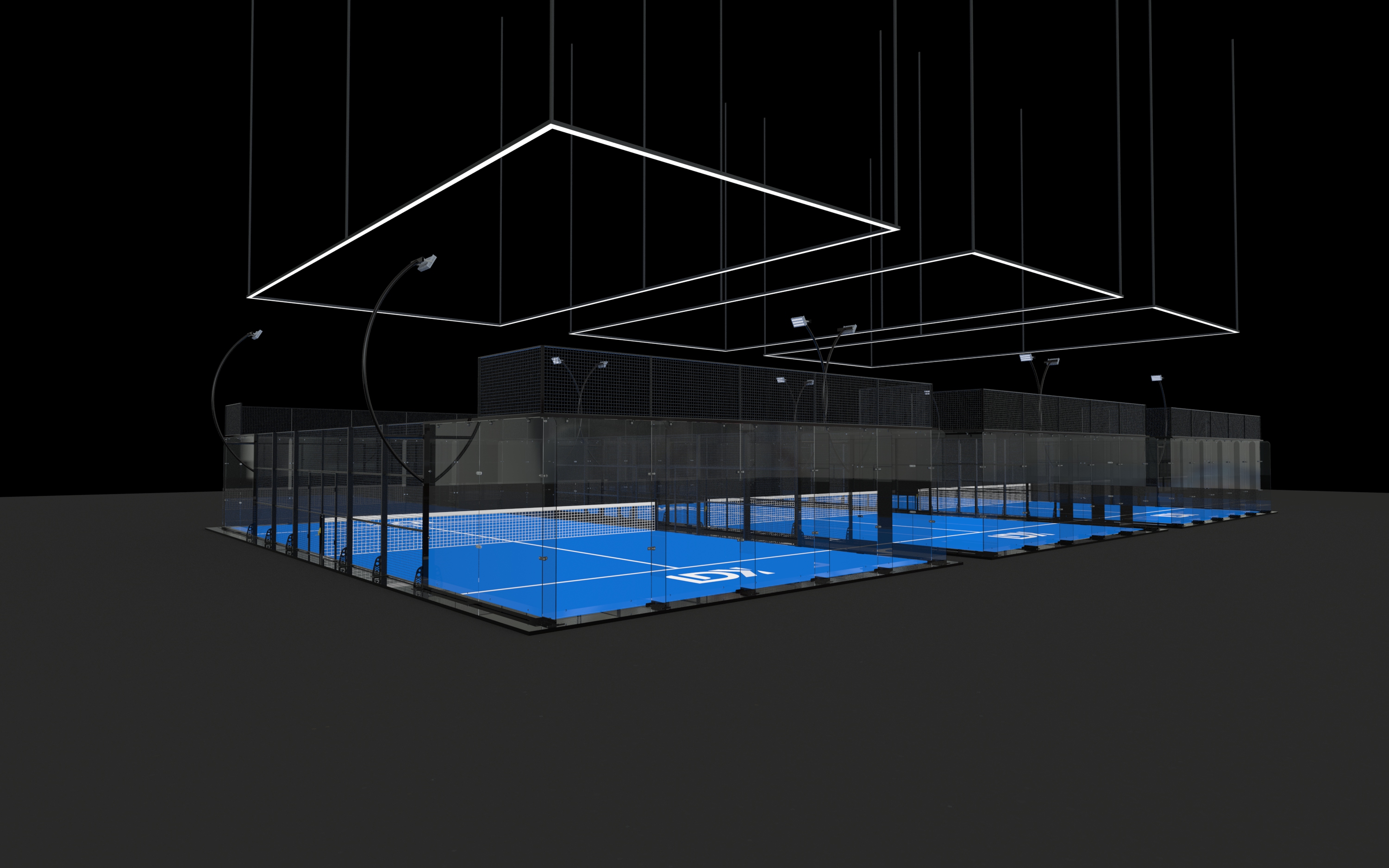
Customize the best padel court
Panoramic vs. Classic Courts: Pillar-Free Design Pushes the Limits of Steel Structures
Traditional Padel courts typically feature partial glass enclosures or designs incorporating structural pillars. While this layout offers relative simplicity in construction and lower costs, it can visually create a sense of confinement—a feeling of being “boxed in.” In contrast, Full Panoramic courts replace these pillars with transparent tempered glass enclosures on all sides, creating an expansive field of view and an immersive atmosphere. High-end clubs favor this design not only because it allows spectators and coaches to view the match clearly from any angle, but also because it maximizes natural light penetration, rendering the court environment more comfortable and modern. However, this pillar-free design places extremely rigorous demands on the underlying steel structure. The support beams bearing the weight of the glass enclosures must be engineered with precise calculations to withstand wind loads and vibrational stresses; failure to do so could pose significant safety risks during adverse weather conditions.
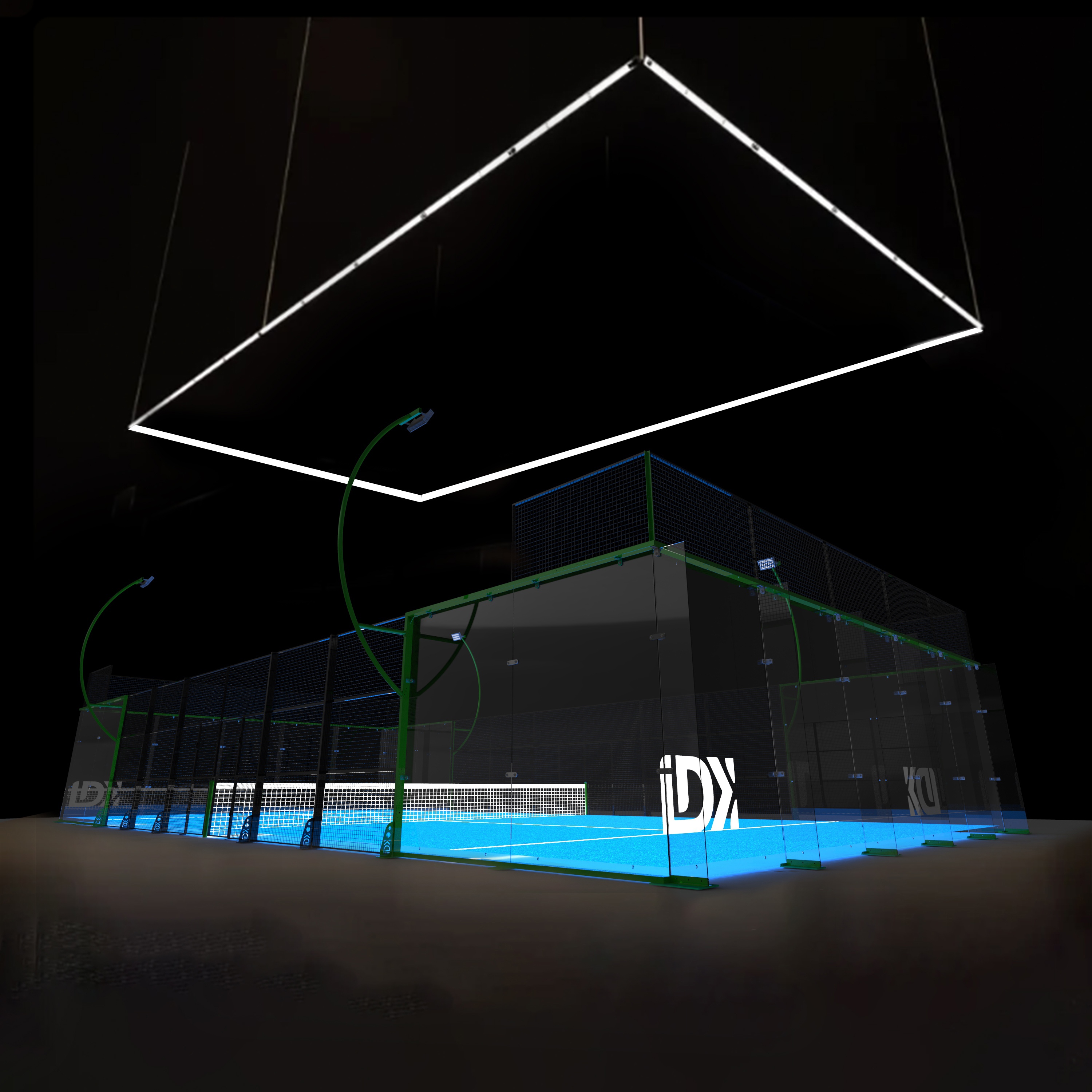
Squash Glass Court Padel Glass Tempered Tennis Padel Court Glass with CE certificate
The Secrets of the Glass: Technological Breakthroughs in Shatter Resistance and Impact Strength
The core material of a Full Panoramic court is 12mm tempered safety glass. Unlike ordinary glass—which is prone to shattering under high temperatures or external impact—tempered glass undergoes a specialized process of heating and rapid cooling. This process creates a layer of compressive stress on the surface, thereby significantly enhancing its resistance to impact. Scientific data demonstrates that modern tempered glass can maintain its structural integrity even when struck by a racket or a high-velocity ball, preventing fragmentation and eliminating the risk of flying shards causing injury to players. To address the issue of spontaneous glass breakage, manufacturers typically employ a rigorous selection process for raw glass sheets, optimize the annealing process, and carefully control stress concentrations at the edges and coating layers. These measures ensure the glass remains stable and intact, even when subjected to extreme temperature fluctuations or prolonged physical impact. This series of technological breakthroughs strikes a perfect balance between aesthetics and safety, instilling confidence in high-end clubs as they invest in these state-of-the-art facilities. The Science of the Court Surface: How Details Define the Athletic Experience
Beyond the glass enclosures, the court’s playing surface—the turf—is equally critical. Modern Padel courts predominantly utilize fine-textured artificial grass, broadly categorized into two types: monofilament and fibrillated. Monofilament turf is frequently chosen for competitive venues due to its uniform rebound and the resulting fast pace of play; conversely, fibrillated turf excels in cushioning and comfort, effectively mitigating stress on players’ knees and joints. The choice of material directly influences the rhythm of the game and player safety; consequently, clubs must meticulously tailor turf specifications during the design phase to align with their target demographic and the specific nature of the competitions hosted.
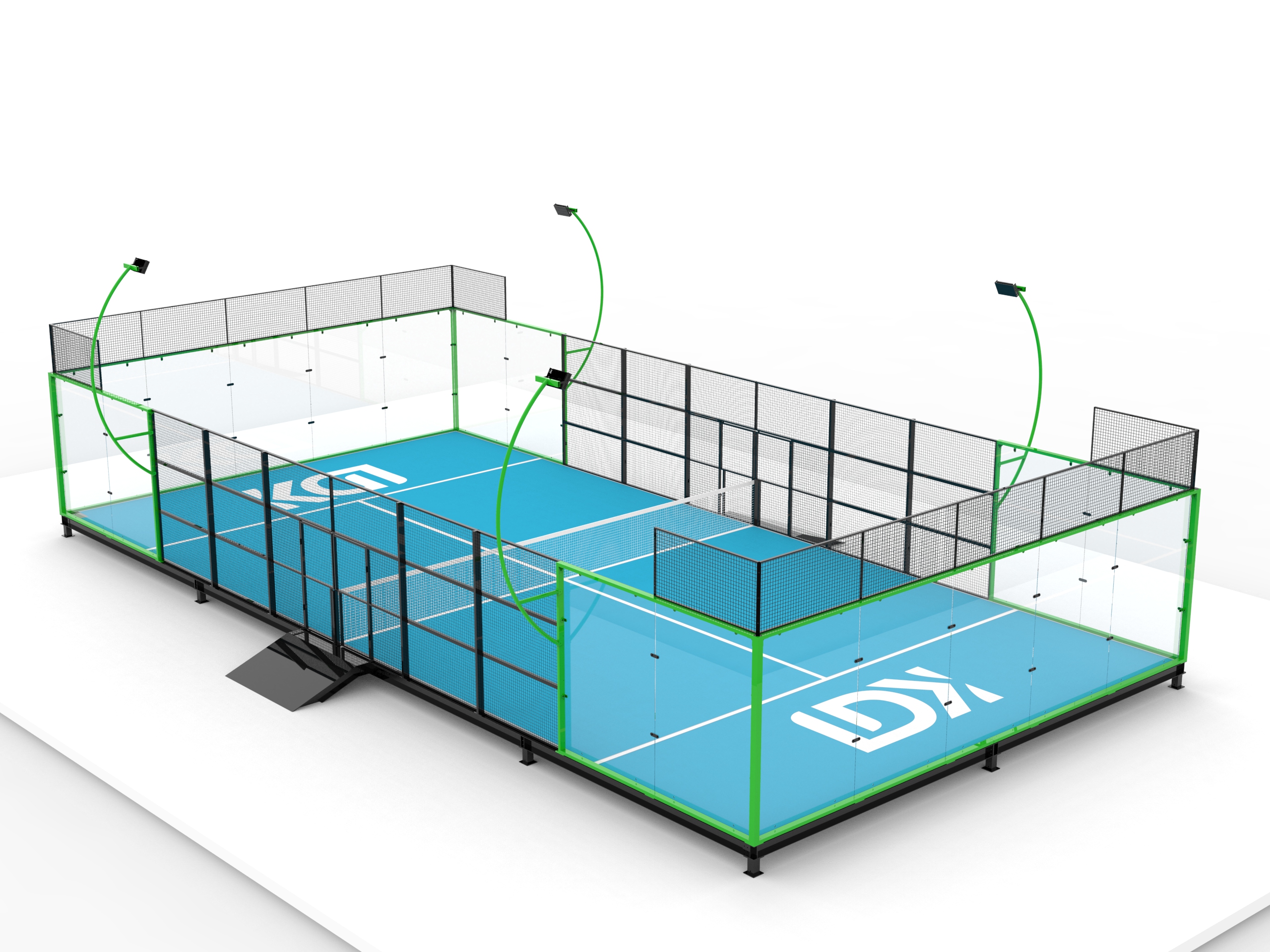
CE Certificated Blue Green Red Grass Padel Customized Artificial Turf Padel Tennis Court
All-Weather Readiness: The Scientific Logic Behind Roofing and Drainage Systems
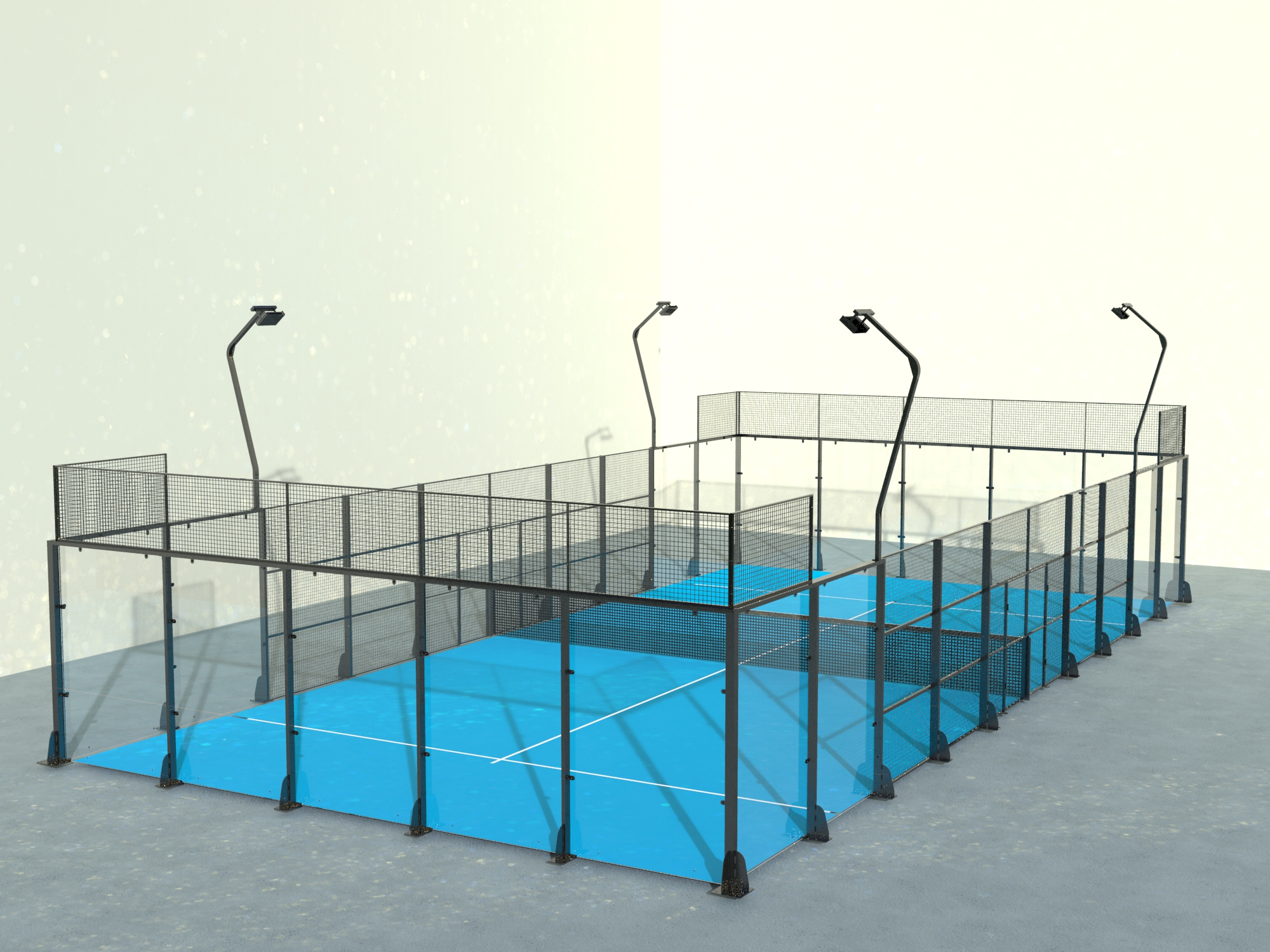
Modern Padel courts must also be engineered to withstand the diverse climatic challenges of various regions. For instance, the extreme heat and intense UV radiation prevalent in the Middle East necessitate glass and turf materials with high thermal resistance, often complemented by the installation of protective roofing. Conversely, venues in Northern Europe must prioritize structural load-bearing capacity to handle snow accumulation, alongside robust drainage system designs. Exemplary Padel courts typically feature intelligently sloped roof structures paired with high-efficiency drainage channels, designed to rapidly channel away rainwater and melting snow, thereby ensuring the court remains playable under all weather conditions. These meticulous design details not only extend the operational lifespan of the facility but also guarantee a safe and comfortable experience for the players.
Conclusion
From the visual splendor of panoramic glass to the impact resistance and anti-spontaneous-breakage properties of tempered glass; from the rebound and cushioning characteristics of the turf to the climate adaptability of the roofing and drainage systems—every single detail reflects the precision engineering that defines modern Padel courts in terms of aesthetics, safety, and functionality. For clubs striving to deliver the ultimate athletic experience, the seamless integration of materials science and engineering technology constitutes the core competitive advantage in creating a premium sports venue.
Publisher:
Post time: May-11-2026


