
Introduction: Artificial Turf—The Heart of the Modern Football Pitch. Over the past decade, Cage Football has rapidly gained global popularity within the sports market, thanks to its high intensity, fast pace, and exceptional utilization of space.
As the central element of the venue, the quality of the artificial turf used in Cage Football pitches directly determines both athletic performance and player safety. However, many sports facility operators face a common challenge: after periods of heavy use, the turf fibers tend to flatten, infill materials become displaced, elasticity diminishes, and unpleasant odors may even develop. This not only shortens the lifespan of the pitch but also heightens the risk of player injury. This article offers an in-depth analysis of maintenance methods for artificial turf in Cage Football pitches, sharing professional techniques for preserving the surface’s flatness and elasticity to help ensure a lasting return on your investment.
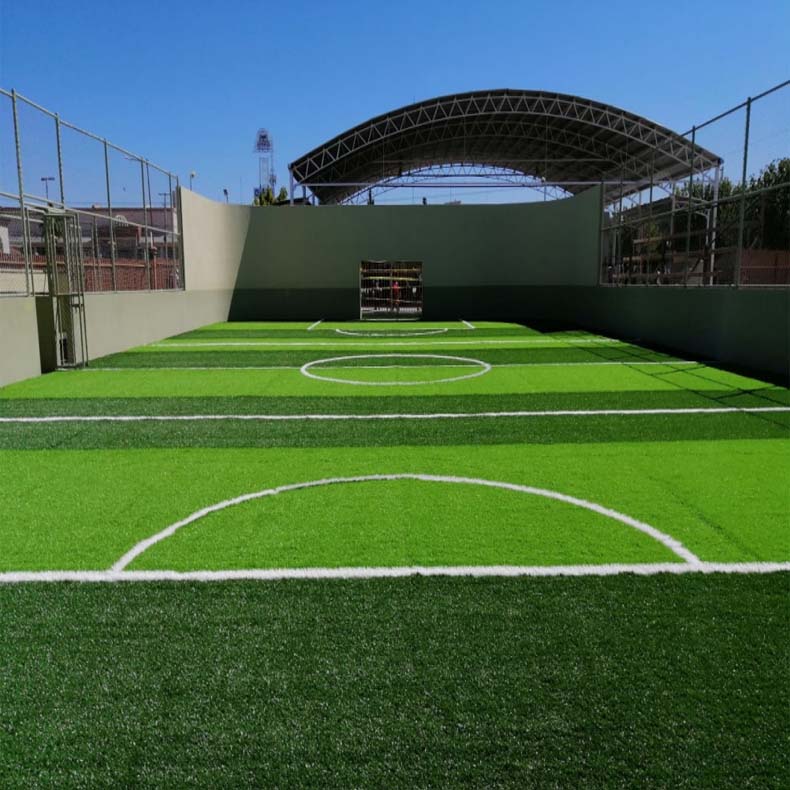
Artificial Turf Tools Hybrid Grass Turf Soccer Artificial Grass For Football Field
I. Why is the Maintenance of Artificial Turf in Cage Soccer Fields So Important?
1. Extending Asset Lifespan:High-quality soccer turf represents a significant investment. Without regular maintenance, exposure to UV radiation, precipitation, and heavy foot traffic will accelerate the embrittlement and wear of the turf fibers. Through scientifically sound maintenance practices, a field originally designed for an 8–10 year lifespan can remain in excellent condition for a much longer period.
2. Enhancing Safety in Training and Competition: Soccer is a highly explosive sport. The surface flatness and elasticity of artificial turf directly influence the ball’s trajectory and the cushioning provided to players’ joints. A poorly maintained field can result in a surface that is excessively hard or riddled with uneven patches, making players highly susceptible to knee and ankle sprains, as well as abrasions.
3. Establishing a Professional Reputation for the Venue: Whether for a commercial soccer club or a school sports stadium, the “visual appeal” of the playing field serves as a primary driver of success. A lush, evergreen, and level turf surface can significantly boost user loyalty and increase the venue’s booking rates.
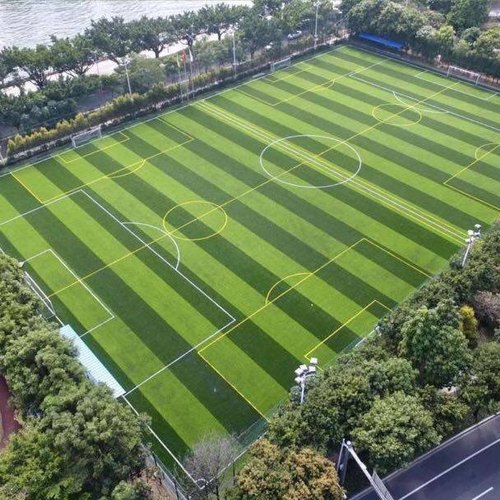
FIFA Standard Football Artificial Grass from Manufacturer
II. Core Insights: The Four Key Areas of Artificial Turf Maintenance
1. Scientific Cleaning: Eliminating Hidden Physical Hazards
- Debris Removal: Regularly use a soft-bristled brush or a specialized vacuum cleaner to clear fallen leaves, paper scraps, and organic debris from the field. If left untreated, these materials will decompose and seep into the turf’s base, leading to poor drainage or mold growth.
- Stain Treatment: For beverage spills or sweat stains left by athletes, use a neutral detergent mixed with warm water for spot cleaning. Strictly avoid using strong acids, strong alkalis, or cleaning agents containing volatile solvents, as these can damage the turf’s backing adhesive.
2. Flatness Management: Combating Fiber Matting
Due to their compact size and the intensity of play, the turf fibers in cage soccer fields are prone to leaning or matting down in one direction.
Turf Brushing: It is recommended to perform a comprehensive brushing of the turf every 2 to 4 weeks of use. Employ a motorized grooming machine or a weighted soft-bristled brush to brush the fibers against the grain, restoring them to an upright position. This not only enhances the field’s aesthetic appeal but also helps maintain a natural ball roll speed.
3. Elasticity Preservation: Precision Maintenance of Infill Granules
The athletic performance of artificial turf depends largely on its underlying infill material (typically rubber granules or quartz sand).
- Infill Balancing: Over time, heavy foot traffic causes the infill granules to shift, resulting in thinning in high-usage zones such as the penalty areas and the center circle. Operators must regularly inspect these areas, replenishing the infill as needed and brushing it evenly across the surface.
- Anti-Compaction Treatment: Prolonged exposure to sunlight and rain can cause the underlying infill granules to clump together and harden, thereby compromising their shock-absorbing properties. Regularly loosening the infill using specialized equipment is the most effective method for maintaining the field’s elasticity.
4. Drainage and Environmental Control: Preventing Moisture and Mold
While artificial turf itself is impervious to rain, prolonged water accumulation within the underlying drainage layer (base) can lead to the deterioration of the backing adhesive and the generation of foul odors.
- Drainage System Clearance: Ensure that the drainage channels surrounding the field remain free of debris and blockages; a thorough inspection is particularly critical prior to the rainy season.
- Odor Elimination: For indoor cage soccer fields—which tend to be less ventilated—regularly applying a professional antimicrobial turf agent is recommended to inhibit bacterial growth and prevent odors.
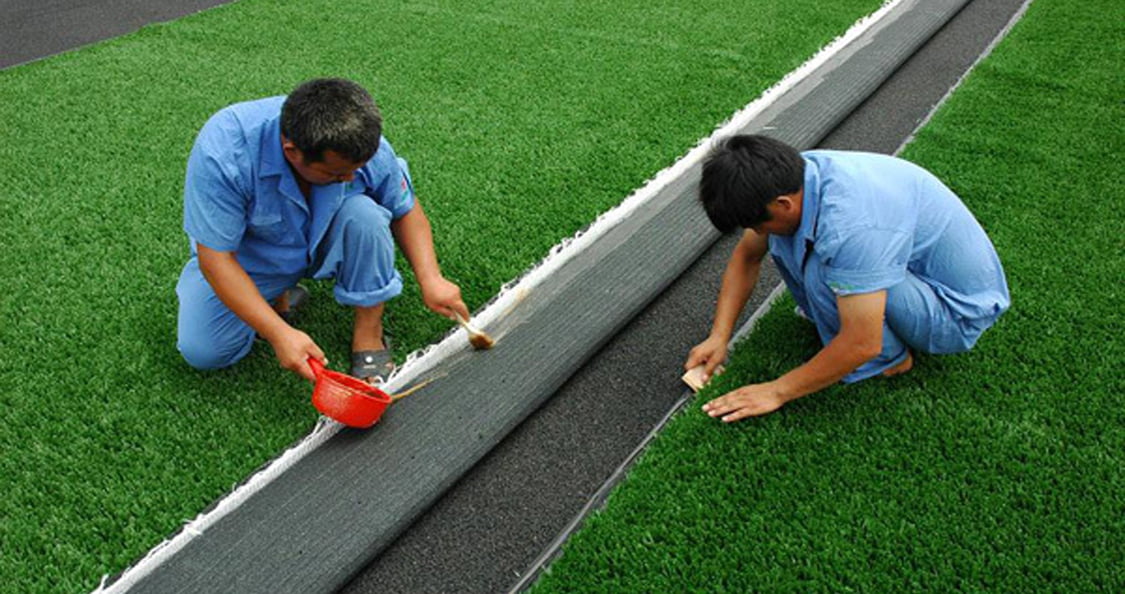
Professional Football Artificial Grass for Stadium and Training Fields
III. Professional Advancement: Maintenance Plans for Different Stages
To facilitate venue managers, we have categorized maintenance tasks into three distinct cycles:
- Daily Maintenance: Remove surface debris and address visible stains to keep the surface clean and tidy.
- Monthly Maintenance:Deep-groom the turf fibers and check the infill levels to restore the lawn’s resilience and evenness.
- Annual Maintenance:Use specialized equipment to deep-loosen the infill, and inspect the seams and adhesive to eliminate potential safety hazards, thereby significantly extending the turf’s lifespan.
IV. Industry Trends: Green, Wear-Resistant, and Biomechanical
As a leading export supplier of artificial grass for football, we have observed that the global market in 2026 is focusing on the following trends:
- Wear-Resistant Fiber Technology:To address the extremely high wear and tear associated with cage football, the market is increasingly favoring the use of multi-faceted monofilament fibers (such as diamond or wave shapes); this structural design offers superior resilience and abrasion resistance.
- Bio-Friendly Infill: Driven by growing global concern for sustainable development, natural cork granules (Cork Infill) and thermoplastic elastomers (TPE) are gradually replacing traditional recycled rubber, providing a better underfoot feel and enhanced environmental safety.
- Intelligent Monitoring Systems:State-of-the-art venues are beginning to integrate sensors to monitor turf surface temperature and hardness in real-time, automatically alerting staff when maintenance is required.
V. Professional Advice for International Buyers and Venue Owners
When selecting artificial turf for cage football pitches, it is crucial to prioritize the supplier’s capacity for providing post-installation guidance. A high-quality product represents only half the battle; a comprehensive maintenance system is the true key to ensuring the long-term longevity of your asset.
Our Commitment: We provide not only professional-grade football turf that meets FIFA standards but also a complete suite of maintenance guidelines and after-sales support. From the precise formulation of UV-resistant additives to the design of high-density woven backing fabrics, we are dedicated to ensuring that every cage football pitch stands as a paragon of both safety and competitive performance.
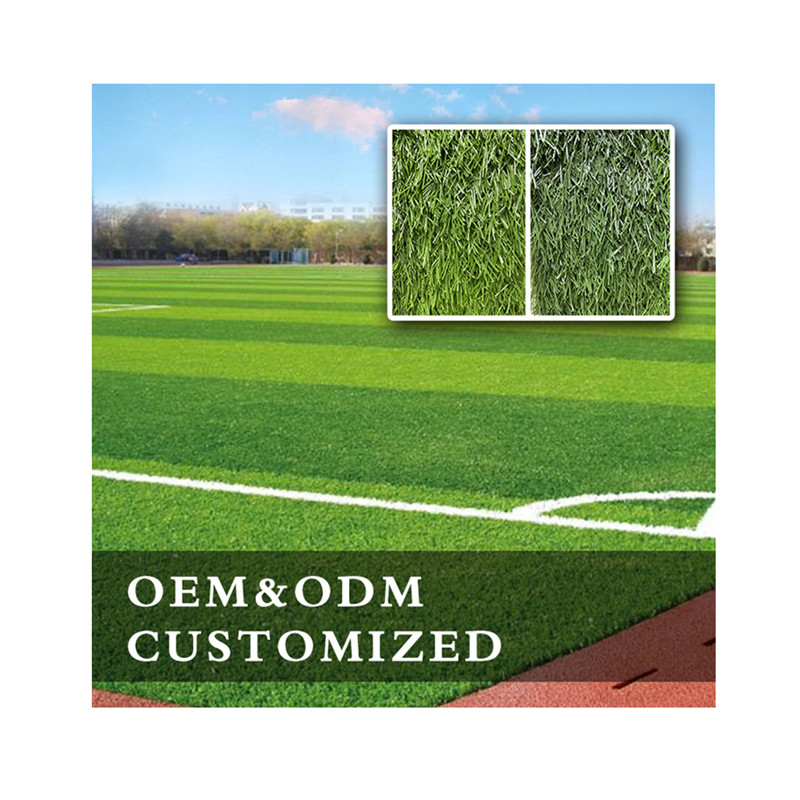
Outdoor Football Artificial Grass with High Wear Resistance
Conclusion: Keeping Your Venue Forever Young Amidst the Greenery
A flawless football turf serves as the bedrock of passion and speed. Through systematic Cage Football Turf Maintenance, we not only safeguard your artificial turf—a core asset—but also attract more elite players by ensuring exceptional performance.
As experts with years of deep experience in the artificial grass for football industry, we fully understand the technical sophistication that lies behind every patch of greenery. By selecting high-quality products and complementing them with scientific maintenance techniques, your cage football pitch will become an evergreen oasis within the city.
If you are seeking football turf solutions that meet international standards, or require maintenance advice tailored to specific climatic conditions, please do not hesitate to contact our technical team.
Publisher:
Post time: Apr-15-2026


