[International Sports Industry Watch – May 2026] Driven by the global upgrading of sports infrastructure and the explosive growth of indoor racquet sports—such as Padel and Squash—in high-purchasing-power regions across Europe, the Americas, and the Middle East, traditional sports venue construction models are undergoing a profound dual revolution in both “technology and aesthetics.” Bolstered by the historic inclusion of Squash as an official competitive event at the 2028 Los Angeles Olympics, the global market in 2026 has witnessed a historic peak in demand for professional squash court construction and high-end, custom-designed sports venues. Amidst this transformation, an innovative architectural form—the Full Glass Squash Court—which seamlessly blends “minimalist aesthetics” with “extreme durability,” is rapidly emerging as a benchmark feature that high-end sports clubs, municipal projects, and commercial complexes (such as soccer arenas and sports complexes) worldwide are vying to adopt.
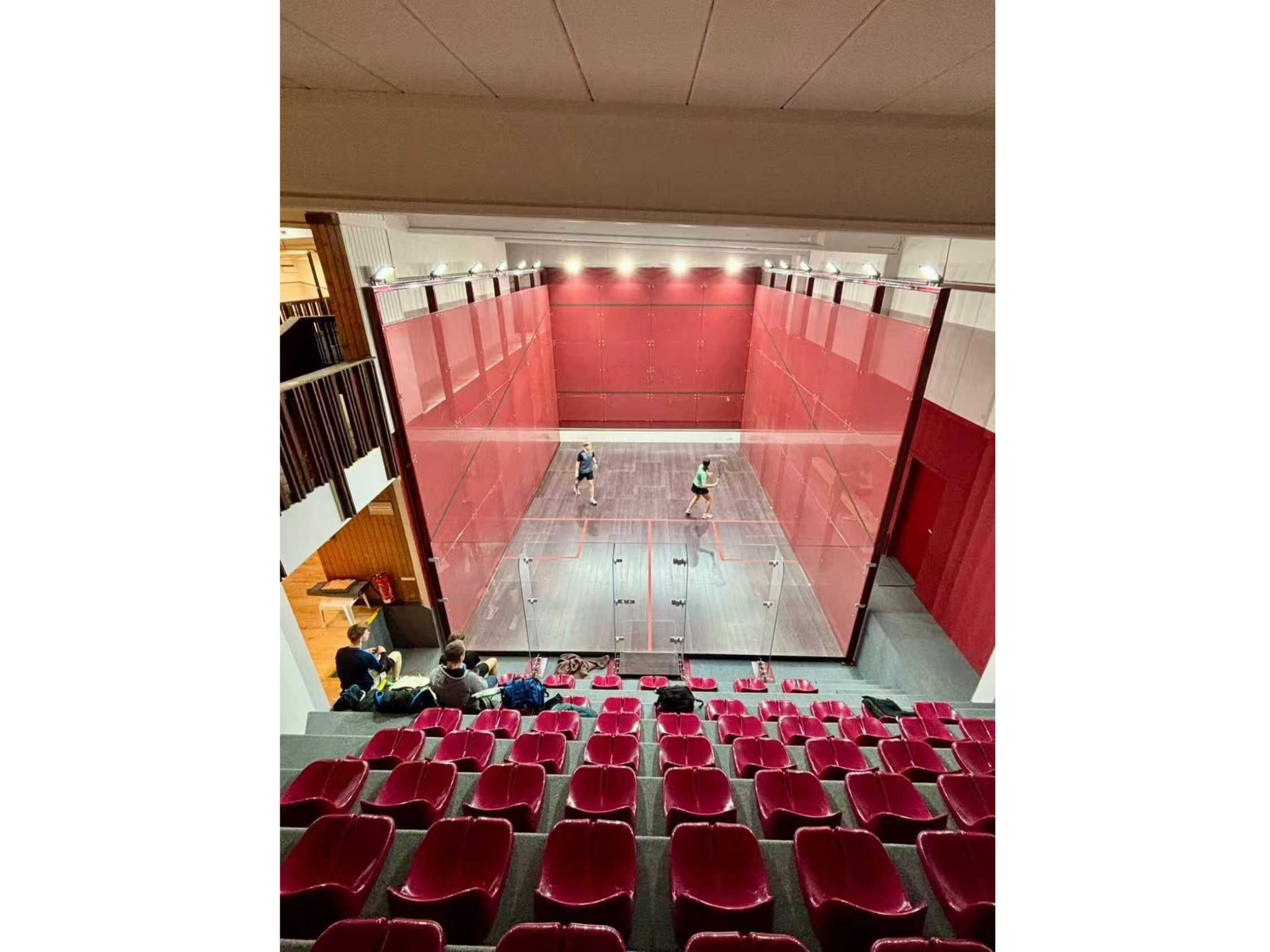
Customized Glass Squash Court with for Padel Sports Construction in Squash and Tennis
I. The Perfect Fusion of Minimalist Aesthetics and High-Value
- Commercial Space:Traditional squash courts typically feature a structure comprising three enclosed white plaster walls combined with a glass door at the rear. While this design fulfills basic competitive requirements, its enclosed nature and restricted sightlines severely limit the commercial spectator appeal of matches, making it difficult to integrate into the open-plan designs characteristic of modern, upscale urban clubs. The technological breakthroughs in modern professional squash court construction are most notably manifested in an uncompromising pursuit of “minimalist aesthetics.” Through the use of high-strength, high-transparency, monolithic glass structures, the full-glass squash court completely dissolves the physical barrier between athletes and spectators:
- 100% Panoramic View: Whether situated within the bustling atrium of a shopping mall or the indoor sports center of an upscale residential community, the fully transparent exterior transforms the game of squash into a dynamic urban spectacle—a feature possessing immense “built-in traffic-generating” appeal.
- Doubled Commercial Value for Events: The full-glass design ensures a 360-degree, unobstructed viewing experience, greatly facilitating high-definition (4K/8K) television broadcasting and the seamless integration of on-site advertising placements.
- Integration of Brand and Environment: Minimalist lines harmonize perfectly with the steel structures and lighting designs characteristic of modern architecture, aligning precisely with the aesthetic standards that B2B buyers and architectural designers in Western markets expect from high-end commercial facilities.
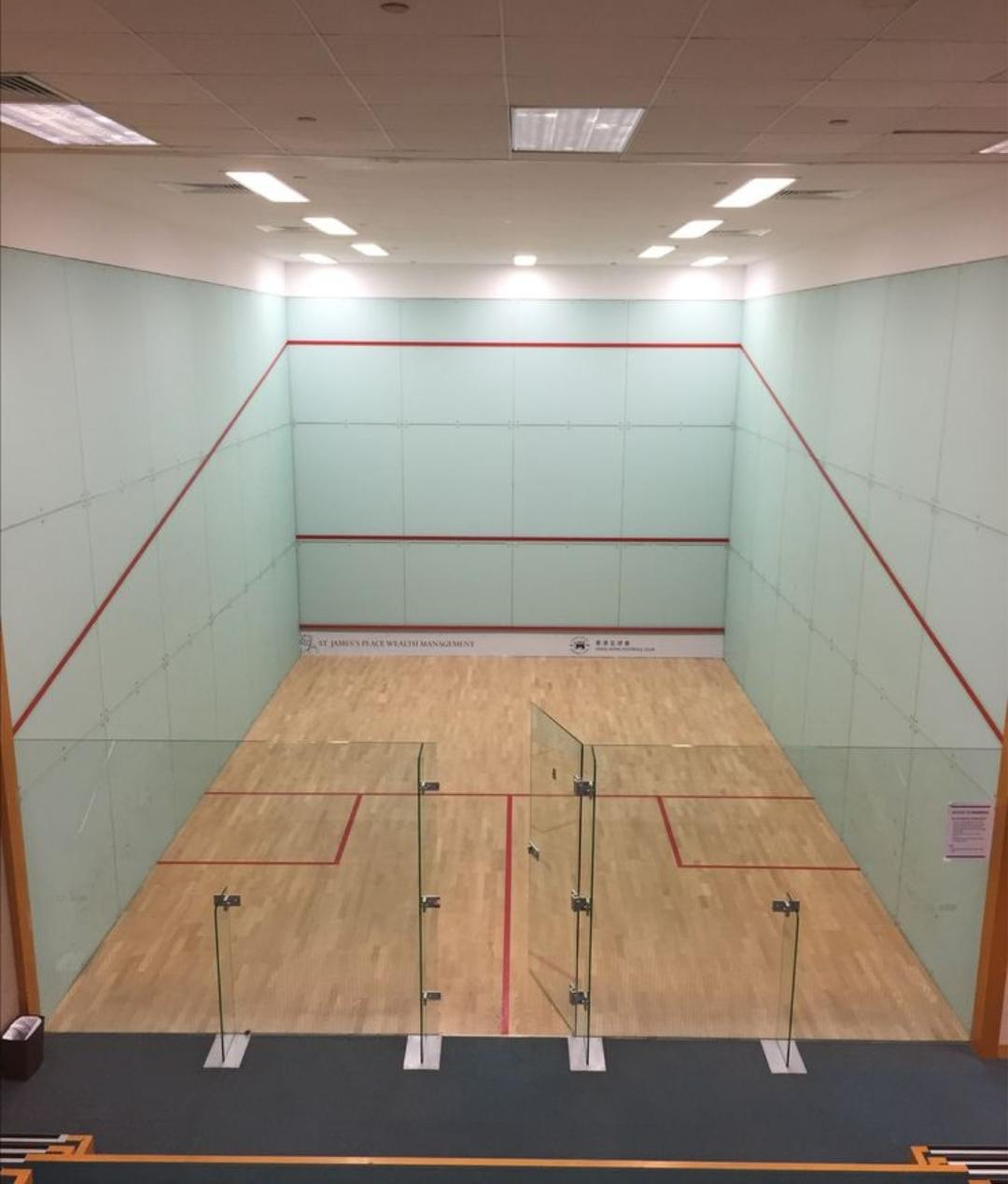
Heavy Duty Outdoor Squash Court with Steel Frame Construction
II. Core Process Breakthroughs: The Safety Code of Anti-Spontaneous Breakage and High-Impact Glass Technology.
For international B2B project procurement specialists, while “aesthetics” serve as a magnet for attracting interest, “safety and durability” constitute the core factors that ultimately determine a project’s success or failure. In the sport of squash, high-velocity rubber balls—traveling at speeds exceeding 250 km/h—repeatedly and violently strike the walls; simultaneously, during intense competitive play, athletes frequently collide with the walls, impacting them with the full force of their body weight. Consequently, the construction of an all-glass squash court involves far more than mere glass assembly; its core competitive advantage rests entirely upon technological breakthroughs in anti-spontaneous breakage and high-impact glass engineering.
1. Precision Processing of 12mm High-Strength Tempered Safety Glass:
Leading professional manufacturers exclusively utilize 12mm or 15mm “ultra-clear” (low-iron), high-strength tempered safety glass that complies with rigorous international standards (such as EU CE certification, US SGCC certification, and China’s GB 15763.2 standard). Ultra-clear glass—characterized by its extremely low internal impurity levels (specifically nickel sulfide, or NiS)—enables manufacturers to limit the rate of spontaneous glass breakage to a mere few parts per ten thousand, thereby eliminating potential safety hazards in public spaces at the very source.
2. Industrial-Grade Enhancement of Surface Stress and Flexural Strength:
Through advanced physical tempering processes, the compressive stress on the glass surface is elevated to levels of ≥90 MPa and in some instances, exceeding 100MPa. This enhancement boosts the glass’s impact resistance to a level 4 to 5 times greater than that of standard glass. Even when subjected to the blistering speeds of shots struck by professional players from the Professional Squash Association (PSA)—or when multiple athletes simultaneously collide with the wall—the glass structure demonstrates flawless kinetic energy absorption and rebound capabilities, exhibiting the utmost durability.
3. Integration of One-Way Vision Dot Matrix Technology:
To ensure athletes’ lines of sight remain unobstructed, high-specification glass squash courts incorporate a specialized “one-way vision dot matrix” layer into their design—a technique similar to the internationally renowned ASB glass wall technology.
Viewed from inside the court, the walls appear as uniform, non-reflective, solid dark surfaces, allowing athletes to clearly track the trajectory of the ball. Conversely, when viewed from outside the court, the glass exhibits high transparency, offering spectators an unimpeded, panoramic view of the match unfolding within. This technology demands extremely high manufacturing precision and serves as a critical benchmark for identifying high-quality squash court suppliers.
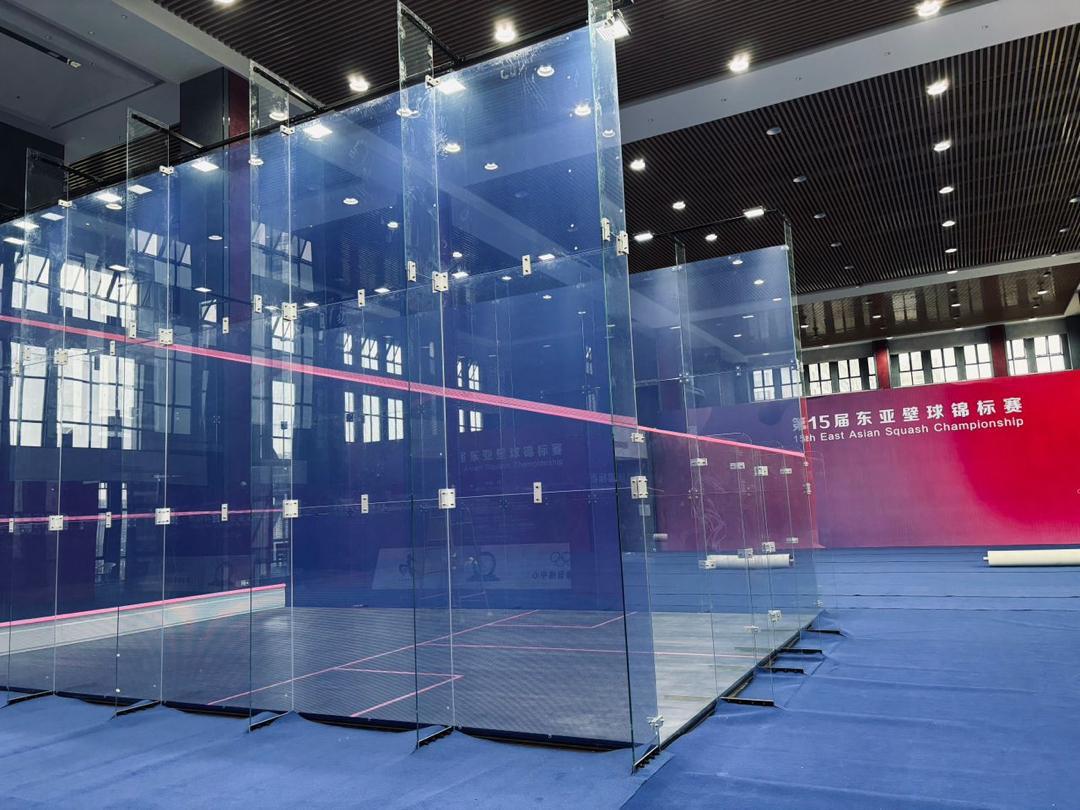
China Custom Glass Squash Court Solution for Commercial Gymnasiums factory and manufacturers | LDK
III. Integrated Hardware and Software Systems: A Closed-Loop Professional Supply Chain.
For a squash court facility to achieve international professional certification and sustain long-term commercial viability, it requires more than just a visually stunning glass enclosure; the integration of its internal systems is equally crucial in demonstrating the manufacturing prowess of the facility builder (whether a Padel Court Factory or Squash Court Manufacturer).
1. Professional-Grade Shock-Absorbing Suspended Wooden Flooring (Sports Flooring):
Squash involves frequent sudden stops, changes in direction, and jumping movements, placing immense stress on an athlete’s knee and ankle joints. Consequently, the court interior must be equipped with professional-grade sports flooring—typically made of maple or oak—featuring a double-layer joist structure. This flooring must achieve a shock absorption rate of at least ≥53% and maintain a ball rebound rate exceeding 93%, thereby fundamentally addressing the dual requirements of protecting athletes and ensuring consistent ball speed. This capability represents a core competitive advantage for comprehensive infrastructure manufacturers that specialize in a diverse range of products, including basketball wooden flooring and portable sports flooring systems.
2. Shadow-Free Professional Seamless Lighting System:
Traditional lighting setups often generate severe glare and reflections on glass surfaces, thereby disrupting gameplay. Modern glass squash courts utilize concealed or overhead linear LED lighting systems characterized by a high Color Rendering Index (CRI). The central illumination level within the court must exceed 1200 lux, while the uniformity of vertical illumination must maintain a ratio greater than ≥0.7.This professional lighting scheme—which is both shadow-free and non-glaring—ensures impeccable visual quality, even during high-speed slow-motion video capture for instant replays.
3. Flexible Hardware Connections and Structural Safety:
All glass panels are interconnected using high-strength stainless steel clamps and specialized anti-vibration gaskets. This distributed, flexible connection structure allows the entire facility to undergo minute, micron-level oscillations when subjected to massive impacts; this effectively releases and disperses instantaneous stresses, thereby guaranteeing zero fatigue damage to the overall steel structure throughout its multi-decade service life.
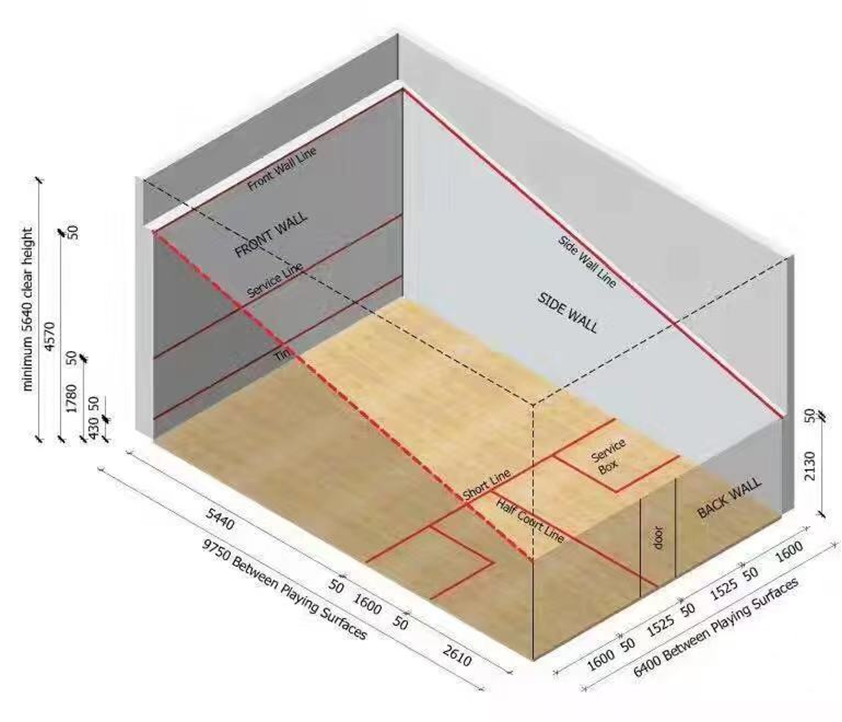
China Full Glass Squash Court with Steel Structure Frame factory and manufacturers | LDK
IV. 2026 International Market Outlook:
Investment Hotspots in the “Blue Ocean” Markets of Europe, the Americas, and the Middle East. From the perspective of global market demand, driven by the “North American World Cup Effect”—which has fueled a boom in soccer fields and soccer cages—as well as the worldwide popularization of outdoor padel courts, the upgrading and modernization of high-end indoor racquet sports venues has become an inevitable trend. In the daily operations of high-end sports clubs and arenas across Europe, the Americas, and the Middle East, fully transparent glass squash courts are demonstrating astonishing Return on Investment (ROI) rates.
Thanks to their minimalist aesthetic, these courts instantly elevate the prestige of an entire sports center, thereby attracting high-net-worth members. Furthermore, the glass material possesses characteristics that make it stain-resistant, slow to age, and extremely easy to clean; consequently, its daily maintenance costs are significantly lower than those of traditional plaster walls, which require repainting and pothole repairs every few years.
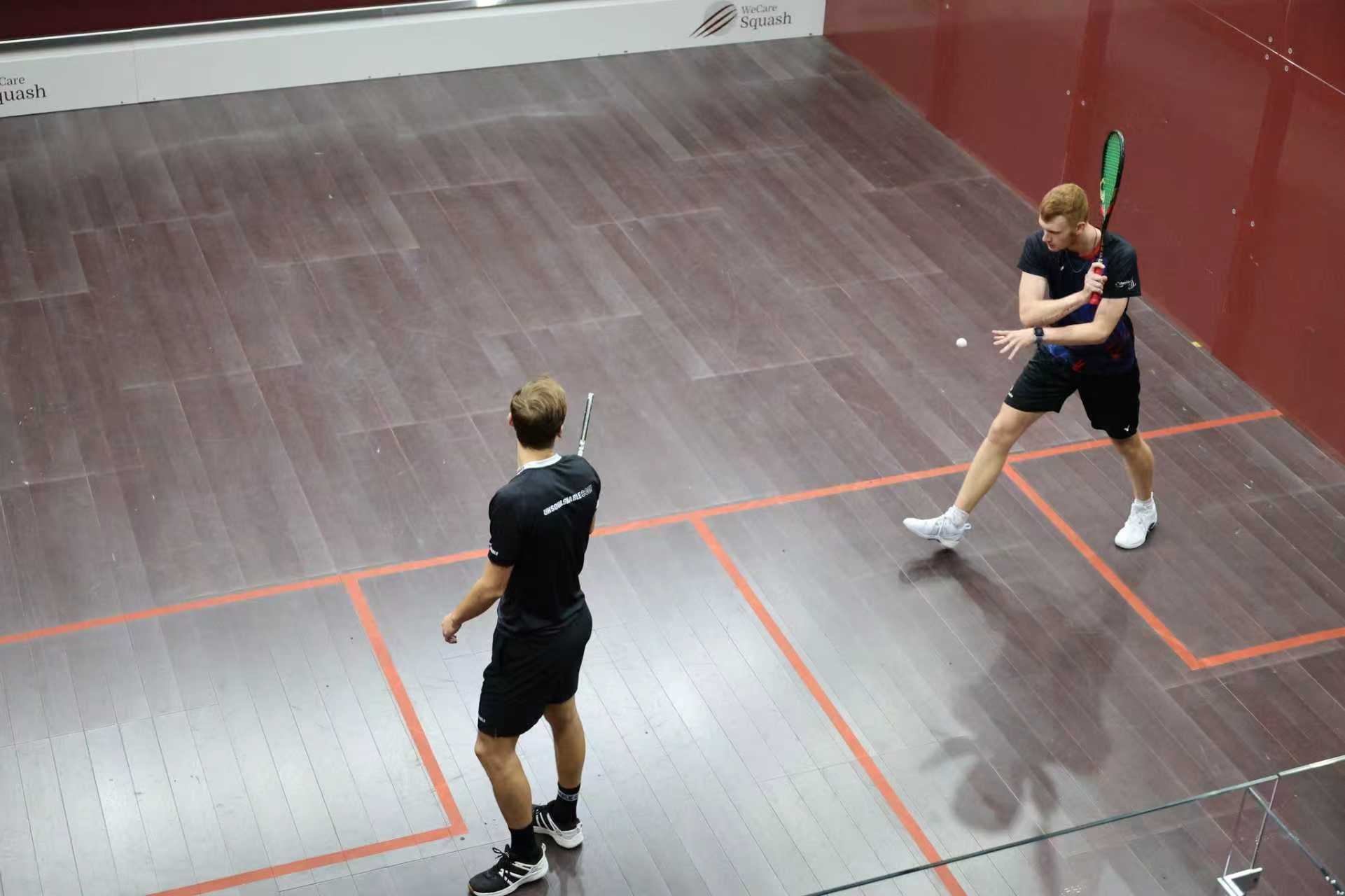
LDK Indoor Squash Court Double Player Squash Court Squash Sports Venue
Conclusion:
The future competition in global sports infrastructure is, in essence, a competition of materials science and industrial aesthetics. The success of fully transparent tempered glass squash courts proves that when “minimalist aesthetics” meet “technological breakthroughs,” the result is not merely a venue for sports, but a high-value piece of urban commercial art.
For B2B sports facility manufacturers and engineering firms with global market ambitions, mastering the core integrated glass technologies—specifically those ensuring explosion-proof safety and high impact resistance—is tantamount to securing a passport to the global high-end infrastructure market.
Publisher:
Post time: May-06-2026