
Most new pickleball venues leave revenue on the table in their first year — and it’s almost never due to low bookings.
As player demand keeps surging through 2026, venue operators and procurement teams are under huge pressure to open doors fast. That rush too often leads to shortcut sourcing: picking the cheapest quote, repurposing indoor flooring for outdoor courts, or locking in a supplier based solely on lead time with no real vetting. Within months, the problems show up: warped outdoor surfaces, scuffed indoor wear layers, inconsistent ball bounce that misses competitive standards, and unplanned maintenance costs that eat straight into margins.
Sourcing reliable, long-lasting pickleball courts doesn’t mean choosing between speed and quality. Below, we break down the most common procurement pitfalls, how to match flooring to your exact operating environment, and what to look for in a manufacturer so you can launch on schedule — and avoid costly surprises down the line.
The Procurement Risks That Derail Most Pickleball Projects
Most problems don’t show up on installation day — they appear 6 to 18 months later. Here’s what usually goes wrong:
1. Flooring that doesn’t meet play standards: Off-spec surfaces create inconsistent ball bounce and slippery footing, which drives away regular players and raises injury liability.
2. Using the wrong floor for the environment: Indoor flooring laid outdoors cracks and fades in a season; outdoor flooring used indoors feels stiff and wears unevenly under heavy foot traffic.
3. Delivery delays that kill your launch timeline: Suppliers with limited production capacity push lead times out months, forcing you to reschedule grand openings and lose reservation events.
4. Cheap floors that cost more long-term: Budget options often need full replacement in 1–2 years, plus downtime for repairs that costs far more than the upfront savings.
5. No support after you pay: Many sellers disappear once the shipment leaves the warehouse, leaving you with no installation guidance, warranty coverage, or replacement materials.
Pick the Floor Built for Your Exact Space
This is the step most buyers skip, and it’s the one that causes the most expensive mistakes. Indoor and outdoor pickleball flooring are engineered for completely different conditions — getting this right eliminates most future maintenance and performance issues.
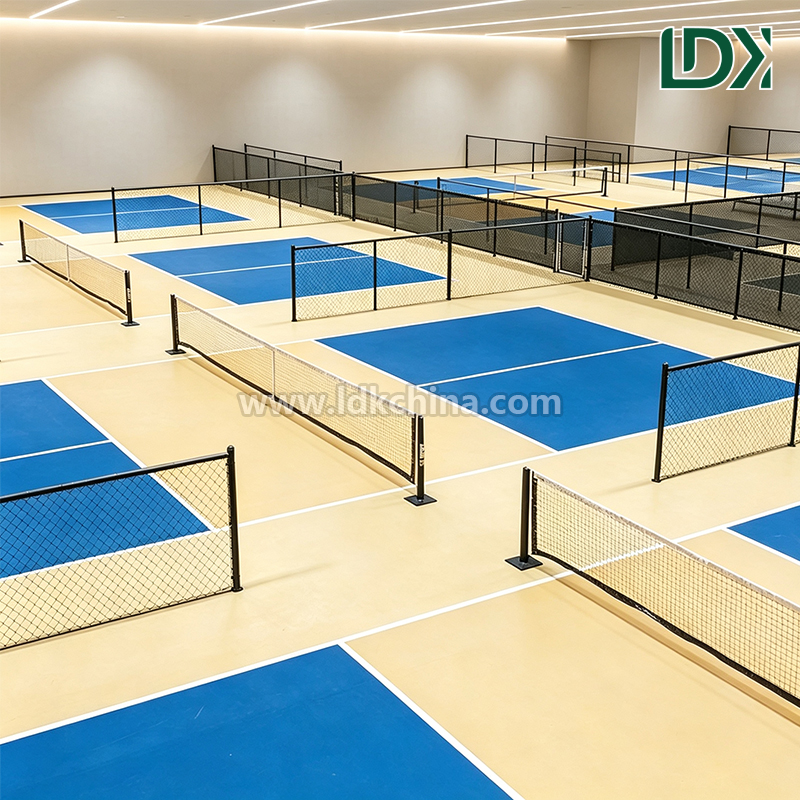
Indoor Pickleball Flooring
Best for: indoor sports complexes, fitness clubs, community centers, and dedicated pickleball barns with controlled temperature and no direct sun exposure.
What’s inside, and why it matters:
• 2.0mm total thickness, with a 0.4mm frosted ultra-hard wear layer designed to hold up to back-to-back bookings and constant sneaker friction without scuffing.
• A high-strength fiber reinforcement layer keeps the material Dimension wise stable, so it doesn’t shrink or warp at the seams over years of use.
• The 1.6mm dense airtight base layer delivers consistent compression and predictable ball response, meeting standards for competitive play.
What it means for your bottom line: That thick wear layer translates to years of heavy use with only basic cleaning required. No weather damage, no frequent resurfacing, very low ongoing maintenance costs — and a much longer replacement cycle.
Outdoor Pickleball Flooring
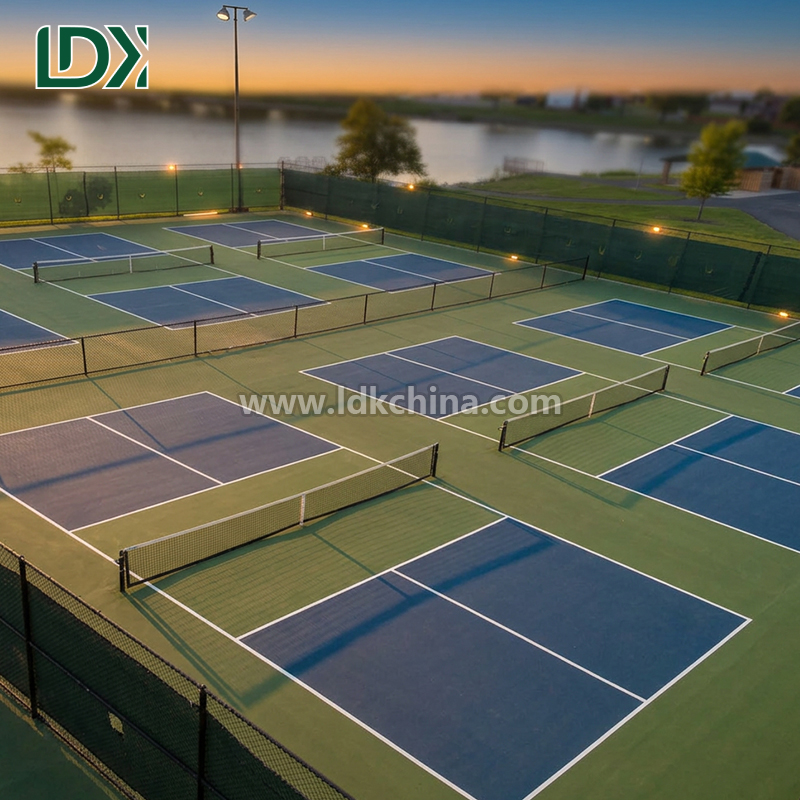
Best for: public parks, school campuses, resorts, recreation areas, and open-air commercial venues exposed to sun, rain, and seasonal temperature swings.
What inside, and why it matters:
• 3mm total thickness for extra durability in harsher outdoor conditions.
• The surface is embedded with anti-slip particles and coated with acrylic outdoor finish formulated to resist UV fading, ozone damage, and acid rain.
• The same high-strength fiber reinforcement layer controls shrinkage and prevents warping when temperatures spike and drop.
• A 2.8mm dense airtight base layer stands up to heavy outdoor foot traffic and maintains flatness over time.
What it means for your bottom line: The weather-resistant coating keeps the surface from fading, cracking, or becoming slippery after months of sun and rain. this purpose-built outdoor option holds its performance and appearance for years, cutting way down on refurbishment costs and court closures.
Look Past Total Thickness — Check the Layered Structure
A lot of buyers only compare “2mm vs 3mm” on a spec sheet, but the composition of each layer is what actually determines how the floor performs and how long it lasts. A reliable court uses three distinct layers, each with a job: a wear layer for traction and durability, a fiber reinforcement layer for stability, and a dense base layer for compression and bounce.
Before you buy, confirm:
• The wear layer thickness and formulation (frosted hard surface for indoor, anti-slip weather-coated for outdoor)
• That fiber reinforcement is included to prevent shrinkage and seam separation
• The density and compression rating of the base layer
• That the product is certified to standards
Do the Math on Lifetime Cost, Not Just Sticker Price
The cheapest quote almost never ends up being the cheapest option. When you’re comparing suppliers, factor in the full cost of ownership:
• Maintenance costs: Outdoor floors without proper weather coating need frequent patching and repainting; thin indoor wear layers scuff easily and require constant refinishing.
• Downtime: Every day your court is closed for repairs is lost revenue from bookings, lessons, leagues, and events.
• Installation speed: Roll-format flooring goes down far faster than tile or poured systems, so you can open earlier and start generating revenue sooner.
Work With a Manufacturer That Has Proven Global Delivery Experience
Fast sourcing isn’t about cutting corners — it’s about partnering with a supplier that can consistently deliver on quality, lead times, and logistics, no matter where your project is.
Look for a manufacturer that:
• Runs its own in-house production, so it controls both quality and lead times instead of relying on third-party factories
• Offers both standard roll sizes and custom dimensions to fit your exact court layout
• Has a track record of completed projects across multiple countries and climate zones
• Provides support from initial spec selection through installation guidance, not just a sales quote
LDK: Pickleball Court Flooring Built for Real-World Use
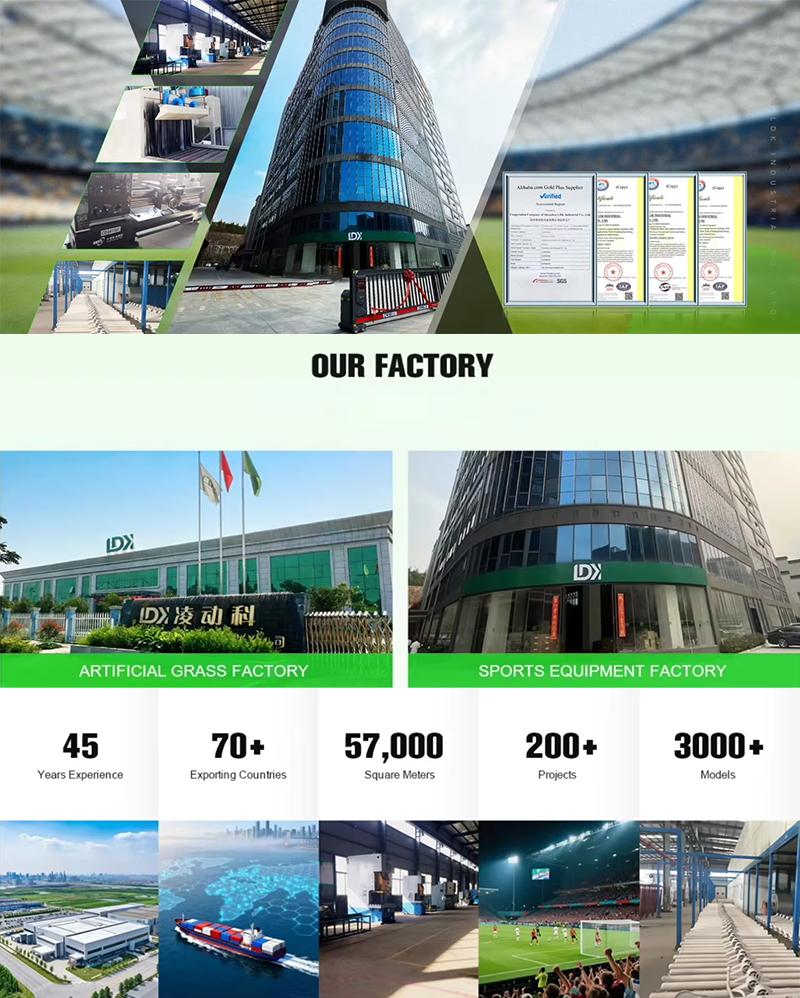
If you looking for a supplier you can rely on for consistent quality, stable lead times, and products that hold up over years of use, LDK is a China-based professional pickleball court manufacturer with completed projects in more than 70 countries worldwide.
We build separate, purpose-engineered lines for indoor and outdoor use, so you never end up with a floor that mismatched to your environment:
• Indoor Pickleball Courts : Our 2.0mm indoor flooring features the 0.4mm frosted ultra-hard wear layer, fiber reinforcement, and dense airtight base, delivering PIA-compliant bounce, heavy-use durability, and minimal maintenance for high-volume indoor facilities.
• Outdoor Pickleball Courts: Our 3mm outdoor flooring combines anti-slip particles with UV-stabilized acrylic coating, built to stand up to sun, rain, and temperature extremes while keeping play safe and consistent for years.
All our courts are available in standard rolls or custom-cut dimensions to match your project layout, with streamlined production and global shipping to keep your timeline on track. With decades of sports flooring expertise and installations across 70+ countries, we help buyers avoid the common procurement pitfalls and get their venues open on schedule.
Pickleball demand isn’t slowing down, and the operators who open well-built, low-maintenance courts first are the ones who capture the long-term customer base. By matching your flooring to your actual environment, calculating full lifetime cost, and partnering with an experienced global manufacturer, you can source reliable courts quickly — without the expensive surprises.
Ready to get a spec and quote for your pickleball project? Reach out to LDK today, and we’ll help you pick the right flooring for your space and timeline.
Publisher:
Post time: Aug-27-2026


