In recent years, driven by the deepening implementation of the national strategy for mass fitness and the continuous upgrading of sports consumption, the industry surrounding table tennis—our “national sport” with its vast popular base—has entered a new phase of explosive growth. Whether in newly constructed commercial sports arenas, professional-grade table tennis clubs, or primary and secondary school campuses dedicated to integrating sports with education, the demand for high-quality table tennis equipment is on the rise.
However, faced with a dazzling array of sports equipment on the market, how does one plan a budget rationally? How can one avoid the procurement pitfall where “buying the wrong item is a greater waste than buying an expensive one”? This “Guide to Selecting Table Tennis Equipment and Venue Applications” offers you a comprehensive, in-depth analysis. It focuses specifically on the selection criteria for table tennis tables, while also providing systematic recommendations for the configuration and usage of rackets, nets, and auxiliary training equipment.
I. Core Focus: Rigorous Selection Criteria for Professional Table Tennis Tables
The table tennis table serves as the central platform for the entire sport; its physical properties directly determine the ball’s bounce quality, speed, and the overall playing experience for the athlete. When purchasing a table tennis table, buyers should prioritize an assessment of the following five core dimensions:
1. Tabletop Thickness and Material (Determining Core Bounce Performance)
For Professional Clubs and Tournament-Grade Venues: It is strongly recommended to select a high-density fiberboard (MDF) tabletop with a thickness between 22mm and 25mm. This thickness range complies with the highest tournament standards set by the International Table Tennis Federation (ITTF). It ensures that when a table tennis ball is dropped freely from a height of 30 centimeters, it rebounds to a height of 23–26 centimeters, providing a uniform and exceptional bounce that meets the rigorous training and competition demands of high-level athletes.
For School Sports Programs and Public Fitness Centers: Considering the balance between cost-effectiveness and extremely high daily usage rates, indoor table tennis tables with a thickness of 15mm–18mm are typically sufficient to meet the requirements of standard physical education classes, amateur training, and students’ recreational play.
2. Indoor vs. Outdoor Scenarios: MDF Tabletops vs. SMC Polymer Materials
Many schools and community centers face specific requirements for outfitting outdoor sports areas. Outdoor table tennis tables must never utilize standard MDF (Medium-Density Fiberboard) wooden panels; doing so makes them highly susceptible to warping and cracking due to moisture exposure and prolonged sunlight. For outdoor venues, tables constructed from SMC (Sheet Molding Compound) polymer composites or aluminum-plastic panels are the recommended choice. These materials boast superior resistance to water, UV radiation, and corrosion, ensuring the playing surface remains perfectly flat even under harsh outdoor weather conditions.
3. Surface Coating Process and Anti-Glare Treatment
The playing surface of a high-quality table tennis table requires a multi-layer professional UV roller-coating treatment. The resulting paint film must not only possess a precise coefficient of friction (to prevent high-spin shots from slipping) but also incorporate anti-glare functionality. In indoor table tennis halls—where lighting is often intense—an anti-glare, matte surface effectively absorbs light, thereby protecting players’ eyesight and preventing misjudgments during shots caused by distracting reflections.
4. Steel Tubing Diameter and Structural Stability
The support system of a table tennis table is an aspect often overlooked by purchasers. For venues with high-frequency usage, the steel tubing used for the table legs should have a wall thickness of no less than 1.2 mm to 1.5 mm. Furthermore, the main square support tubes are recommended to measure at least 40 mm × 40 mm or 50 mm × 50 mm. Additionally, the base of each leg must be equipped with adjustable leveling feet, allowing the playing surface to be set to a perfectly level plane even on uneven venue flooring.
5. Folding System and Safety Lock Design
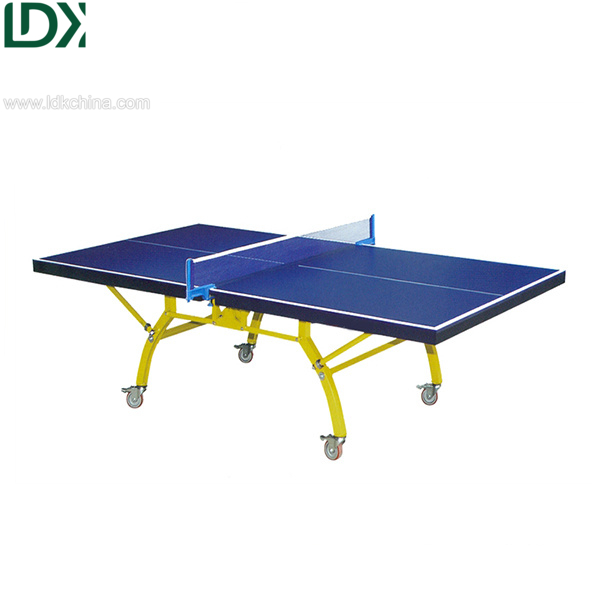
For school venues requiring multi-purpose space flexibility, it is advisable to select single-fold or double-fold table tennis tables equipped with heavy-duty, lockable swivel casters. Of paramount importance are the safety locking mechanisms: the table must be fitted with hydraulic gas struts or mechanical safety locking devices to prevent accidental unfolding while the table is being moved or stored. This constitutes a non-negotiable baseline requirement for ensuring the safety of sports equipment within educational institutions. II. Enhancing the Venue Experience: Rackets, Nets, and Training Aids
II. Enhancing the Venue Experience: Rackets, Nets, and Training Aids
In a comprehensive venue solution, beyond the core table tennis tables, the scientific selection of complementary equipment is equally crucial:
1. Table Tennis Nets and Net Post Systems
Professional Venues: For professional settings, it is recommended to select net post systems forged from precision steel and equipped with spiral fine-tuning mechanisms. This ensures the net height is maintained precisely at the regulation 15.25 cm and allows for adjustable net cord tension. The net fabric itself should be made of durable, tear-resistant nylon material.
School and Public Venues: For schools and public facilities, high-strength clamp-style or spiral quick-assembly net post systems are suitable choices, as they facilitate rapid setup, disassembly, and storage by sports teachers or facility administrators.
2. Configuration of Public Rackets and Balls
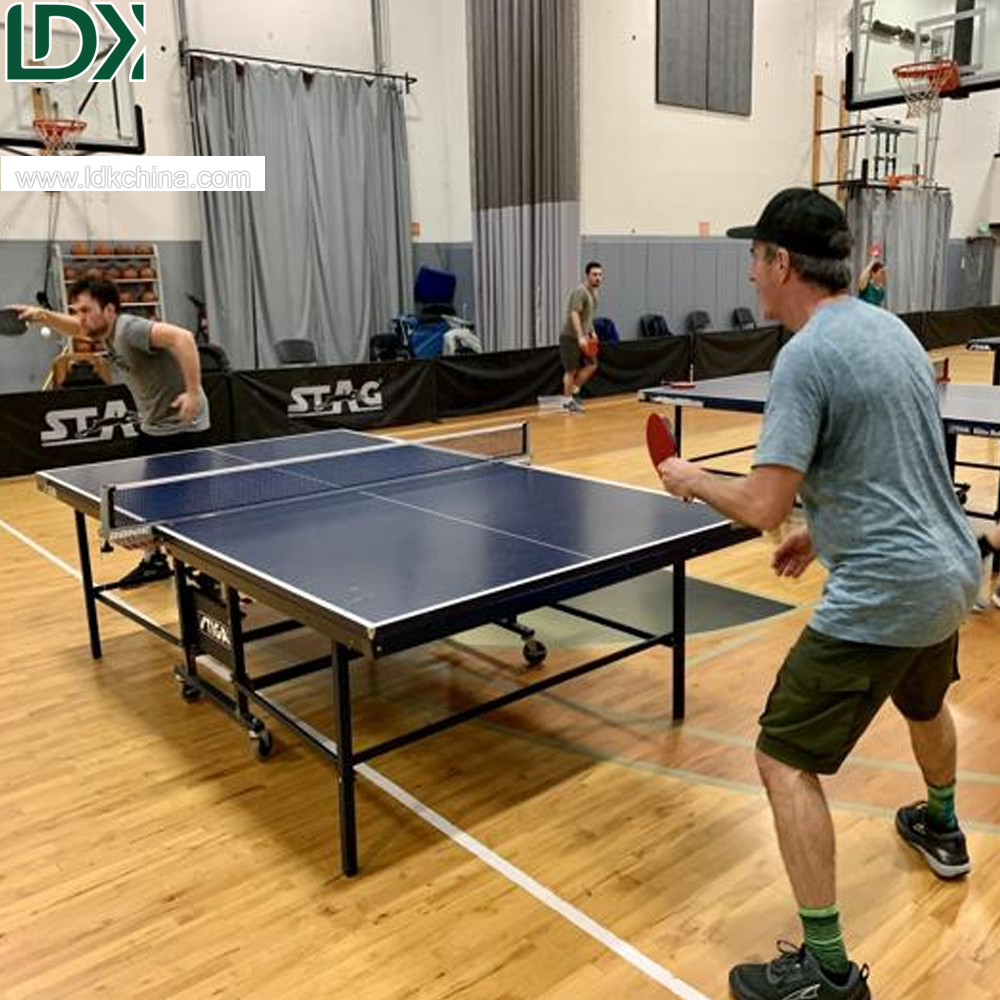
Public rackets provided by clubs and schools experience extremely high rates of wear and tear. It is advisable to avoid purchasing inferior “toy-grade” rackets and instead procure standardized, pre-assembled rackets featuring a pure-wood blade paired with inverted rubber sponges that offer a balanced grip (tackiness). Such rackets strike an optimal balance between control and speed, making them ideal for beginners to develop proper stroke feel. For match play, it is recommended to select 40+ mm, 3-star table tennis balls—specifically those meeting the new material (ABS) standards—to ensure durability and a stable flight trajectory.
3. Training Aids and Smart Upgrades
For modern table tennis clubs or school team training programs, the introduction of auxiliary equipment can significantly boost space utilization efficiency and overall training effectiveness:
Smart Ball Machines: Equipping the venue with one or two smart table tennis ball machines—capable of delivering shots to multiple landing spots and generating various spin modes (topspin, backspin, sidespin)—serves as a powerful tool for enhancing the efficiency of solo training sessions. It also substantially reduces the physical burden on coaches associated with “feeding” balls to players.
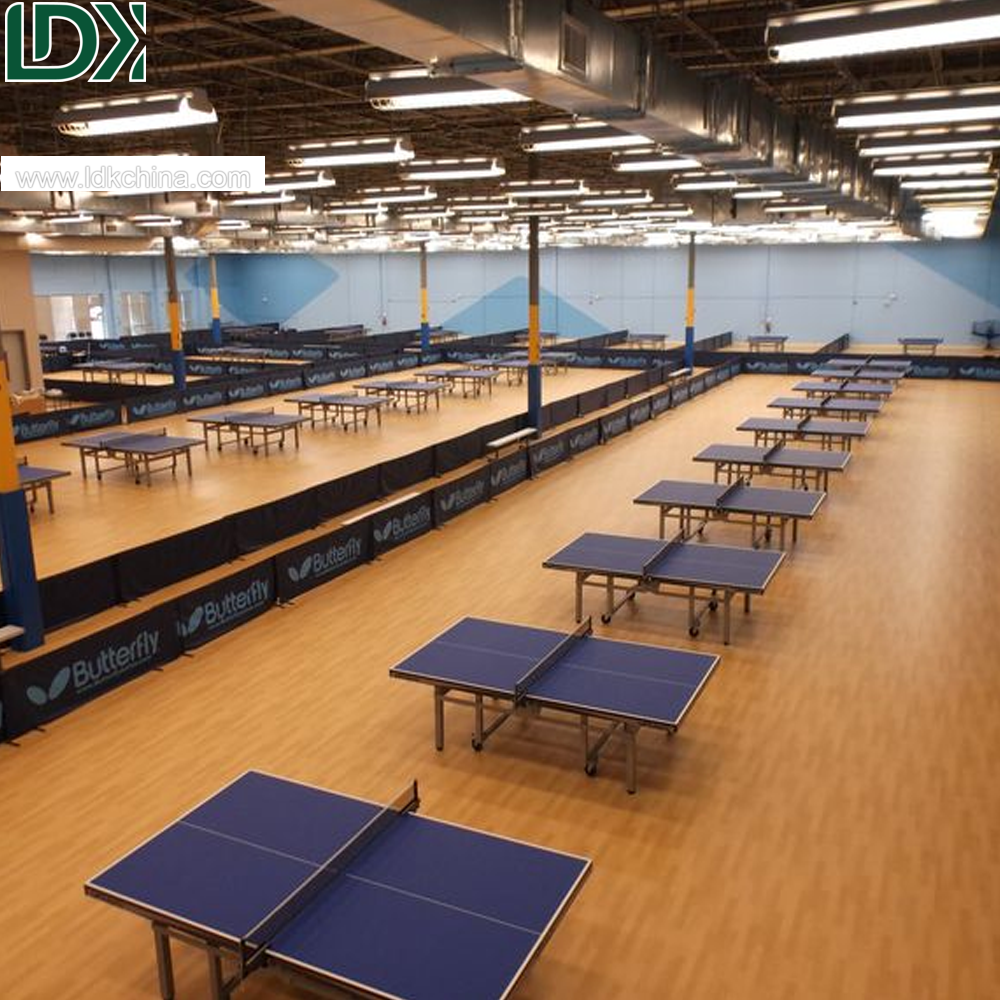
Barrier Boards and Ball Collection Nets: Installing barrier boards (surround barriers)—ideally featuring the venue’s brand logo—around the perimeter of the playing area not only prevents stray balls from scattering but also enhances the professional ambiance of the venue. Additionally, providing long-handled ball collection nets (pick-up tools) allows students to quickly and efficiently clear the playing area after training sessions.
III. Venue Layout and Maintenance Recommendations
Even the finest equipment requires a suitable environment and proper maintenance to perform at its best. When planning and operating a table tennis venue, the following points warrant particular attention:
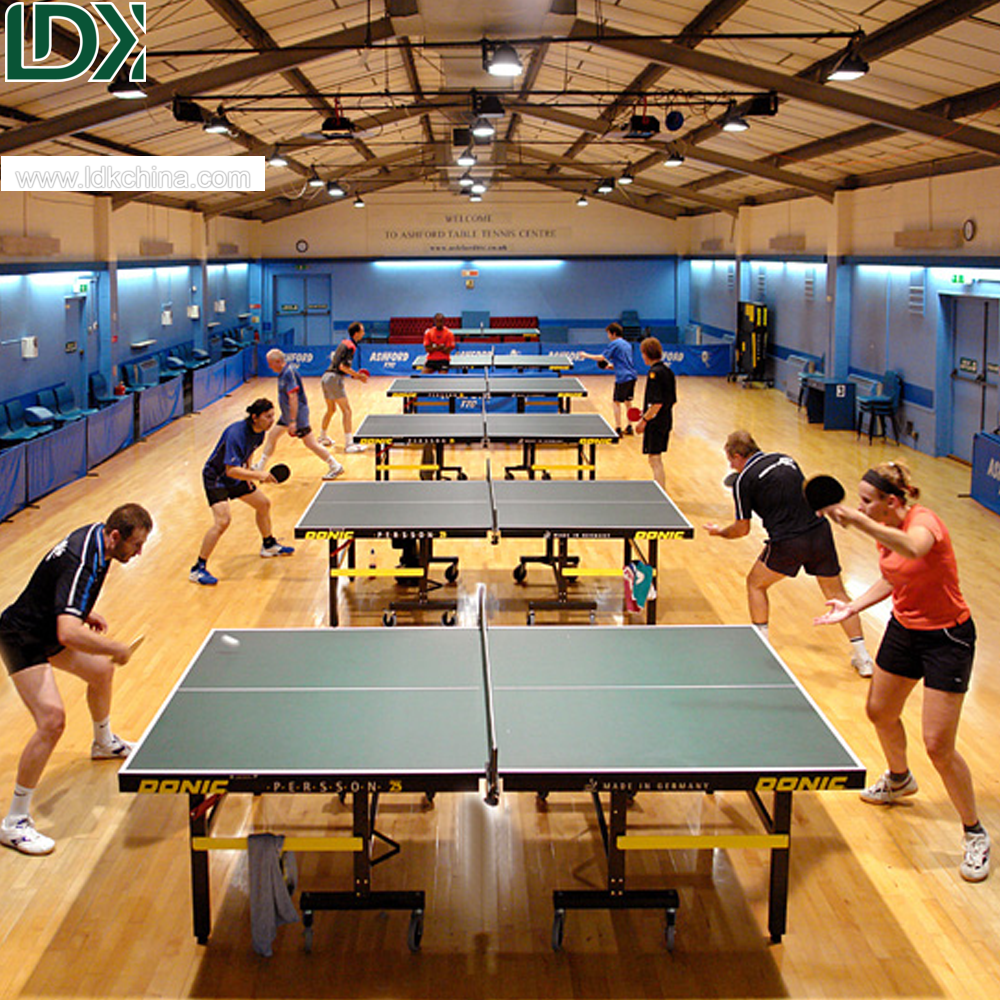
Space and Lighting: International venue standards stipulate that the designated playing area for each individual table must be no less than 14 meters in length by 7 meters in width. In standard school facilities, a safety clearance of at least 2–3 meters should be maintained between adjacent tables. Lighting fixtures should be positioned above the playing surface (at a height of no less than 3 meters) and provide uniform illumination; for competitive play, the lighting intensity must meet a standard of 1,000 lux.
Flooring: It is strongly recommended that the floor be covered with professional, non-slip PVC sports flooring (preferably red or blue) with a thickness of at least 4.5 mm. This material not only provides excellent traction but also effectively absorbs impact to alleviate pressure on the knee joints, thereby protecting the athletes.
Daily Table Maintenance:Indoor table tennis tables must never be rinsed directly with water. For routine cleaning, use a slightly damp, soft cloth to gently wipe dust from the playing surface. Sitting on the table or stacking heavy objects upon it is strictly prohibited. If the venue experiences high humidity, efforts should be made to ensure adequate ventilation during non-operating hours.
Conclusion
Investing in high-quality table tennis equipment not only significantly enhances a venue’s professional image and core competitiveness but also delivers a superior competitive experience for every enthusiast of the sport. Whether you represent a professional club striving for peak performance or a school campus prioritizing safety and durability, adhering to scientific selection criteria—rather than blindly following trends—is the key to maximizing the long-term return on your venue investment. We hope this comprehensive guide serves as a solid and practical reference for professionals and procurement decision-makers within the sports industry.
Publisher:
Post time: Apr-10-2026