As the global construction of indoor sports facilities continues to advance, the demand for squash court construction—a sport that combines speed, skill, and endurance—is growing year by year. Particularly within commercial complexes, educational institutions, and specialized clubs, the construction of high-quality squash courts has become a pivotal factor in attracting members and enhancing the overall value of the facility. Among the various design options available for squash courts, the all-glass court and the solid-wall court represent the two most common types. Understanding the differences between these two designs—specifically regarding construction costs, user experience, visual transparency, and maintenance requirements—is crucial for investors and facility managers seeking to select the most suitable solution.
In recent years, driven by the growing popularity of squash and an increase in competitive events, an increasing number of investors have sought to boost the appeal and operational profitability of their venues by constructing modern squash facilities. Whether for commercial clubs or educational institutions, the design of a squash court impacts not only the athletic experience but also directly influences daily maintenance costs and long-term return on investment. This article provides a comprehensive analysis of all-glass squash courts versus solid-wall courts, examining them across four key dimensions: cost analysis, user experience, visual transparency, and maintenance requirements.
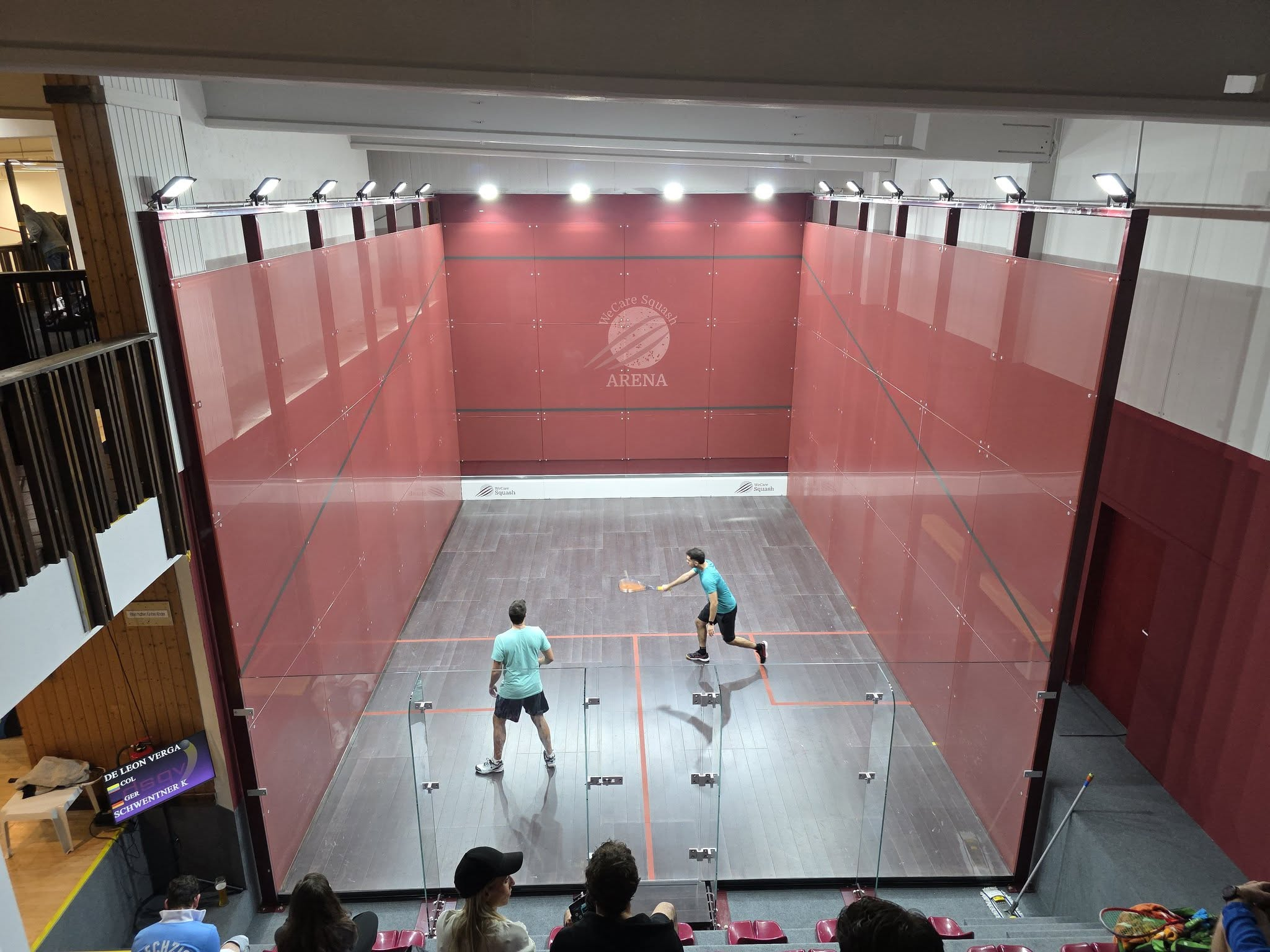
Competition Standard Glass Squash Court Installation from Manufacturer
I. Construction Cost Analysis
All-glass squash courts typically utilize high-strength tempered glass for the surrounding walls, supported by a robust steel structural framework. The cost of glass materials is relatively high; combined with the precision required for installation, the initial investment for an all-glass court is significantly higher than that of a court with solid walls. Depending on the specific dimensions and specifications, the procurement and transportation costs for the high-strength glass panels alone account for 30% to 40% of the total budget. When factoring in the steel structure and flooring, the overall construction cost is typically 25% to 40% higher than that of a court with traditional walls.
In contrast, solid-wall squash courts employ concrete or brick masonry. The construction techniques for these materials are well-established, and the materials themselves are readily available, making the initial investment relatively economical. Although they may fall slightly short of all-glass courts in terms of aesthetic appeal and modern flair, solid-wall courts offer distinct cost advantages for schools or community centers. Consequently, they are a more suitable choice for facility construction projects with limited budgets or for those prioritizing a steady return on investment.
II. Comparison of User Experience
Squash is a high-speed sport in which the court walls play a critical role in determining ball rebound characteristics and acoustic feedback.
All-Glass Squash Courts: The glass walls are smooth and provide uniform rebound properties, ensuring a stable trajectory for the ball as it bounces off the walls. This allows athletes to develop a more precise “feel” for the ball during both training and competitive matches. Furthermore, the transparent glass design allows spectators to watch the entire match uninterrupted, thereby enhancing the visual appeal and interactive nature of the event—making this design ideal for commercial clubs or professional tournament venues.
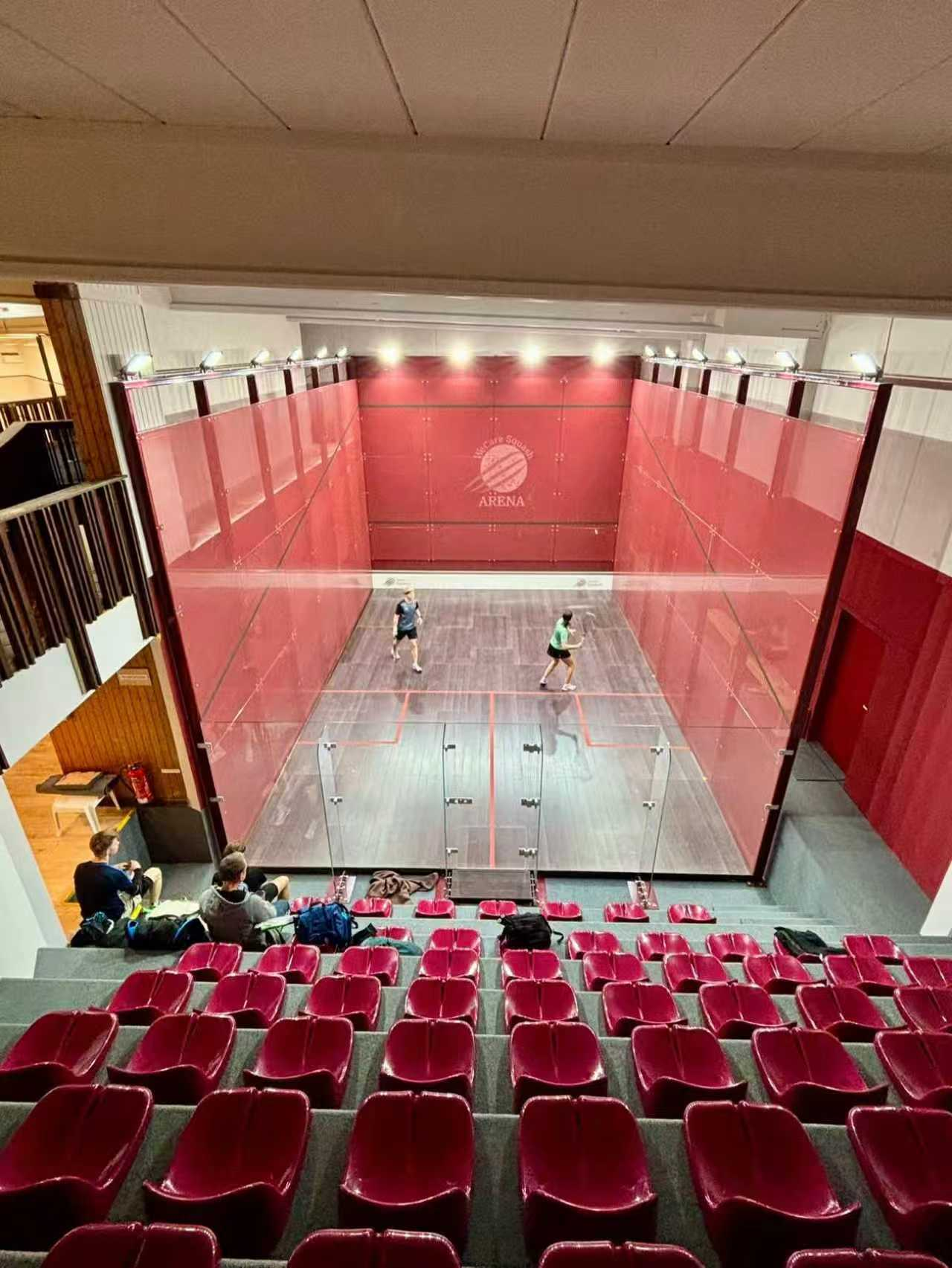
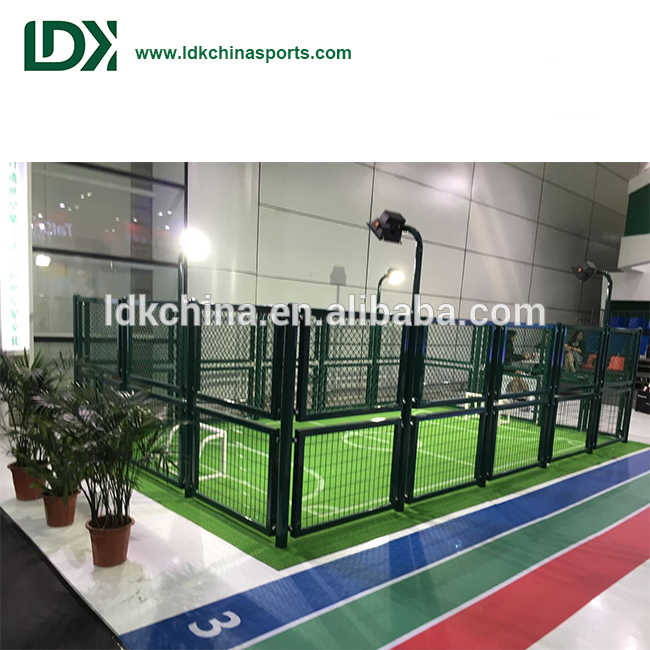
LDK Indoor Squash Court Double Player Squash Court Squash Sports Venue
Solid-Wall Squash Courts: The elasticity and hardness of the walls can be adjusted through the selection of materials; however, because the wall surfaces are opaque, spectators are unable to view the match directly. The rebound of the ball off the walls varies slightly, requiring athletes to adapt to different tactile sensations upon contact. While the training effectiveness remains high, the overall match experience and sense of interactivity are somewhat inferior to those offered by an all-glass design.
III. Lighting and Visibility
Uniform lighting and effective illumination are crucial for indoor sports venues.
All-glass squash courts possess the distinct advantage of natural lighting; their transparent walls allow external light sources to enter, thereby reducing energy consumption for illumination. Furthermore, when paired with an LED lighting system, they ensure uniform lighting conditions for training and matches held at night. This highly transparent design not only enables athletes to track the trajectory of the ball with greater clarity but also provides spectators with an immersive viewing experience.
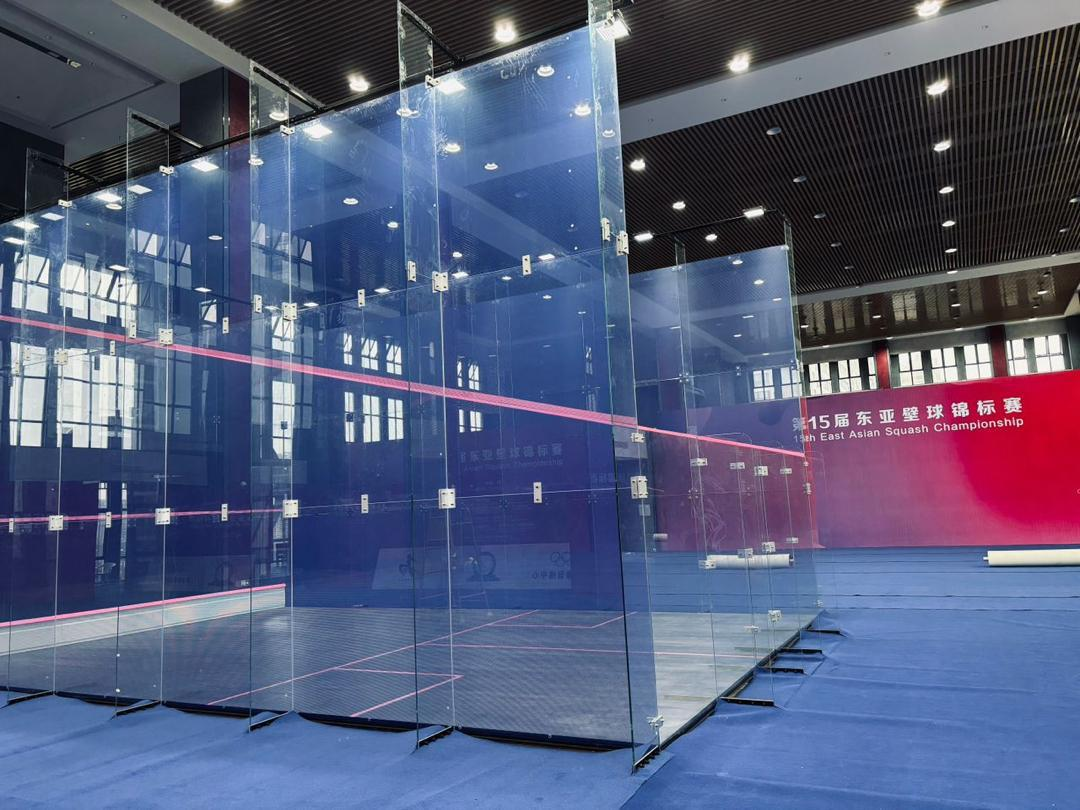
Due to the opacity of their walls, squash courts constructed with solid walls must rely on indoor lighting systems to ensure uniform illumination. While modern lighting equipment can compensate for the lack of natural light, this results in increased energy consumption and design costs. Furthermore, solid walls offer limited visual openness, making the spectator viewing experience less immediate and engaging compared to that of all-glass courts.
IV. Maintenance Requirements
The routine maintenance of a squash court directly impacts operational costs and the facility’s lifespan.
All-glass squash courts require regular cleaning of the glass walls to prevent dust, fingerprints, and scratches from detracting from the aesthetic appeal and spectator experience. Furthermore, while tempered glass is durable, careful attention must be paid to safety measures regarding impact and vibration resistance to ensure the well-being of athletes. Although the overall maintenance cost is relatively high, high-quality glass walls can last for over 20 years, offering excellent long-term cost-effectiveness.
Solid-wall squash courts are simpler to maintain; their wall surfaces are abrasion-resistant and durable, resulting in low cleaning costs. For facilities with high usage frequency—such as those in schools or community centers—the long-term maintenance expenditure for solid walls is lower, making them a sound investment choice. However, in terms of the long-term spectator experience and the potential for enhancing commercial value, they do not match the performance of all-glass designs.
V. Ancillary Equipment and Optimization Solutions
Regardless of whether an all-glass or solid-wall design is chosen, ancillary equipment plays an equally vital role in enhancing both training sessions and competitive events. Key components include:
High-Quality Squash Flooring: Provides anti-slip and shock-absorbing properties to protect athletes’ joints, making it suitable for frequent and intensive use.
Squash Nets and Door Frames: Ensure the standardization and safety of both training sessions and competitive matches.
LED Lighting Systems: Optimize the user experience during evening hours, reduce energy consumption, and improve lighting uniformity.
Scoring Systems and Spectator Facilities: All-glass squash courts are particularly well-suited for the installation of electronic scoreboards and spectator viewing platforms, thereby enhancing the commercial value of the club or event.
By judiciously configuring these ancillary facilities, operators can elevate the athletic experience, extend the facility’s operational lifespan, and simultaneously boost operational revenue.
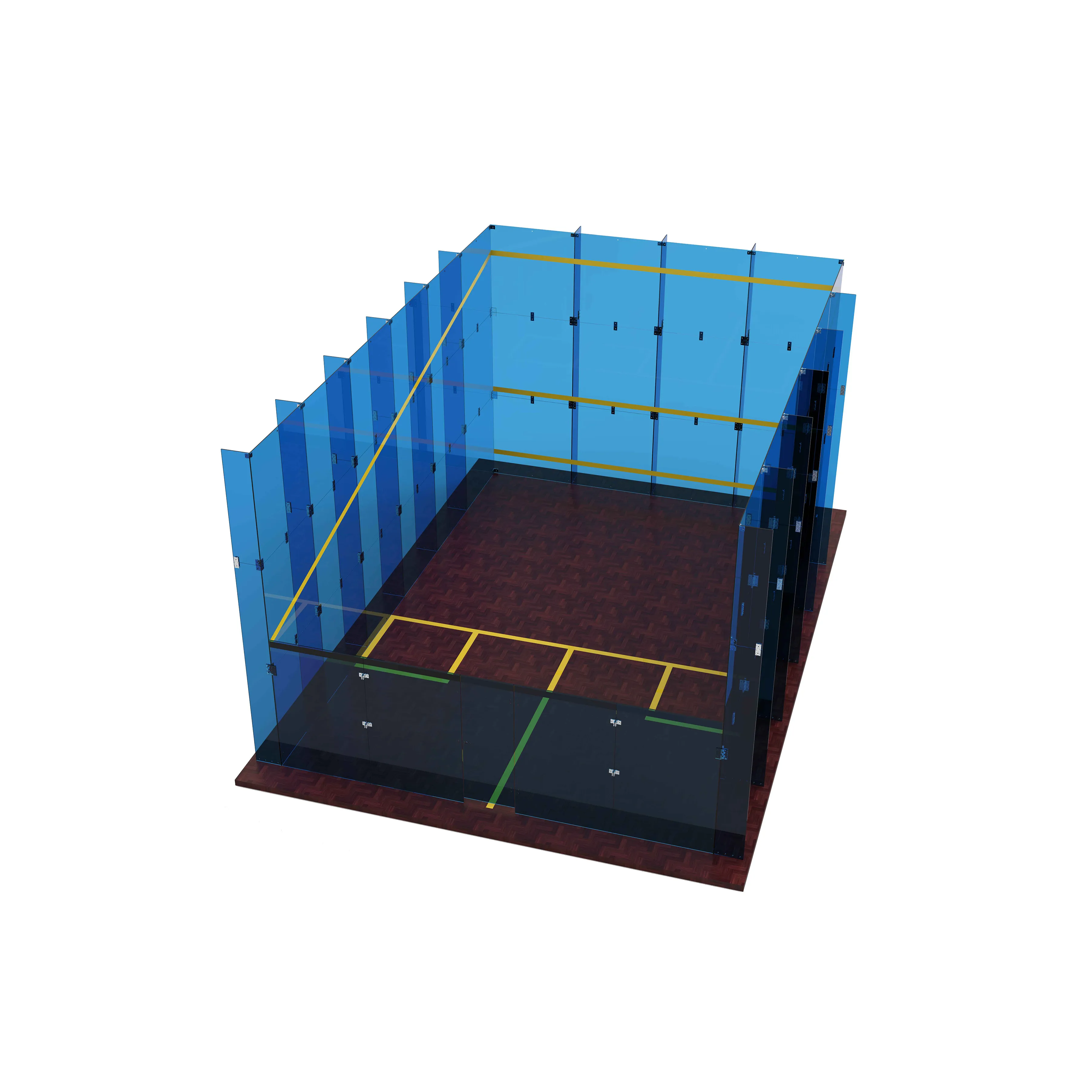
China How much does it cost to build a squash court factory and manufacturers | LDK
VI. Investment and Selection Recommendations
Commercial Clubs and Tournament Venues: All-glass squash courts are recommended, as they strike a balance between modern aesthetics, spectator experience, and high-level training efficacy—making them ideal for attracting members and hosting tournaments.
Schools and Community Centers: Solid-wall squash courts represent a more prudent investment choice; they feature lower construction costs and simpler maintenance, making them well-suited for daily training and smaller-scale competitions.
Hybrid Solutions: Incorporating glass for certain walls while utilizing solid walls for the remainder offers a balanced approach that optimizes both visual appeal and cost control.
Ancillary Facility Planning: The selection of flooring, lighting, nets, electronic scoring systems, and other amenities should be tailored to the venue’s scale and anticipated usage frequency, thereby enhancing operational efficiency and long-term profitability.
VII. Conclusion
Both all-glass and solid-wall squash courts possess distinct advantages:
All-Glass Squash Courts: Characterized by a strong modern aesthetic, excellent visual transparency, and a superior spectator experience, making them ideal for commercial clubs and tournament venues.
Solid-Wall Squash Courts: Distinguished by lower costs and simpler maintenance requirements, making them well-suited for daily training purposes in schools and community centers.
Investors and venue managers should select the most appropriate solution based on their specific budget, venue positioning, target user demographic, and operational objectives. Regardless of the chosen design, integrating high-quality squash flooring, LED lighting, standard nets, and comprehensive ancillary facilities will ensure safety, enhance training effectiveness, and generate stable, long-term returns for the club.
Looking ahead, as the sport of squash continues to gain global popularity and the frequency of tournaments increases, high-quality squash courts—supported by comprehensive ancillary facilities—will emerge as a core competitive differentiator in the construction and operation of sports venues.
Publisher:
Post time: Mar-31-2026