
A glass squash court is an all-glass enclosed court system built with high-strength tempered glass walls, engineered for premium indoor venues that prioritize unobstructed visibility and a world-class spectator experience. A covered squash court is a fully sheltered, outdoor-ready court solution that combines panoramic glass walls with a robust galvanized steel roof structure, enabling year-round play in open-air and exposed locations.
With two professional-grade systems on the market, how do you choose the squash court solution that best aligns with your site conditions, operational goals, budget, and target users? This guide breaks down both options in detail to help you make an informed decision.
Glass Squash Court: The Premium Indoor Spectator Court
Ideal Environment & Core Attributes
Glass squash courts are designed exclusively for indoor installation. They feature four walls constructed from 12mm tempered safety glass with a single-transparent dark blue finish, mounted on a fully modular steel frame system. The glass meets 3C safety standards, and the entire steel frame is detachable and reusable, making it suitable for temporary or relocatable setups. Standard configurations include a professional 500LUX LED lighting system calibrated for competitive play, with an optional certified sports wood flooring system.
The defining feature of a glass court is its 360° transparency, which turns the court itself into a visual centerpiece and allows spectators to view play from all angles.
Best Suited For
• Upscale indoor fitness clubs, luxury hotels, and private member clubs looking to elevate their premium amenities
• Professional squash training centers and academies that host regional or national tournaments
• Indoor sports complexes and commercial recreation facilities targeting high-end clientele
• Projects where interior aesthetics and brand presentation are top priorities
Operation & Maintenance
Indoor placement means glass squash courts have relatively low long-term maintenance requirements:
• Clean glass walls regularly with neutral, non-abrasive glass cleaner to preserve clarity and the single-transparent coating
• Inspect aluminum alloy hardware and steel frame connections quarterly to ensure structural tightness
• If equipped with a sports wood floor, follow standard athletic floor care protocols (regular mopping, annual refinishing as needed)
• No exposure to UV degradation, rain, or temperature extremes, resulting in a longer service life with minimal upkeep
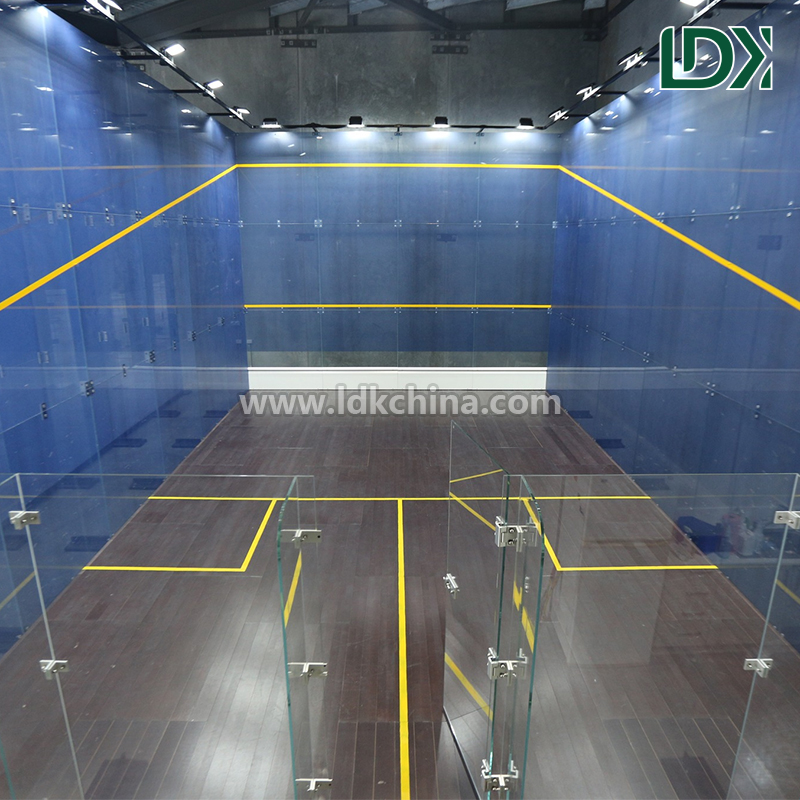
Full Glass/Wood Walls Squash Court Construction Portable Squash Court Flooring For Squash Center
Covered Squash Court: The All-Weather Outdoor Solution
Ideal Environment & Core Attributes
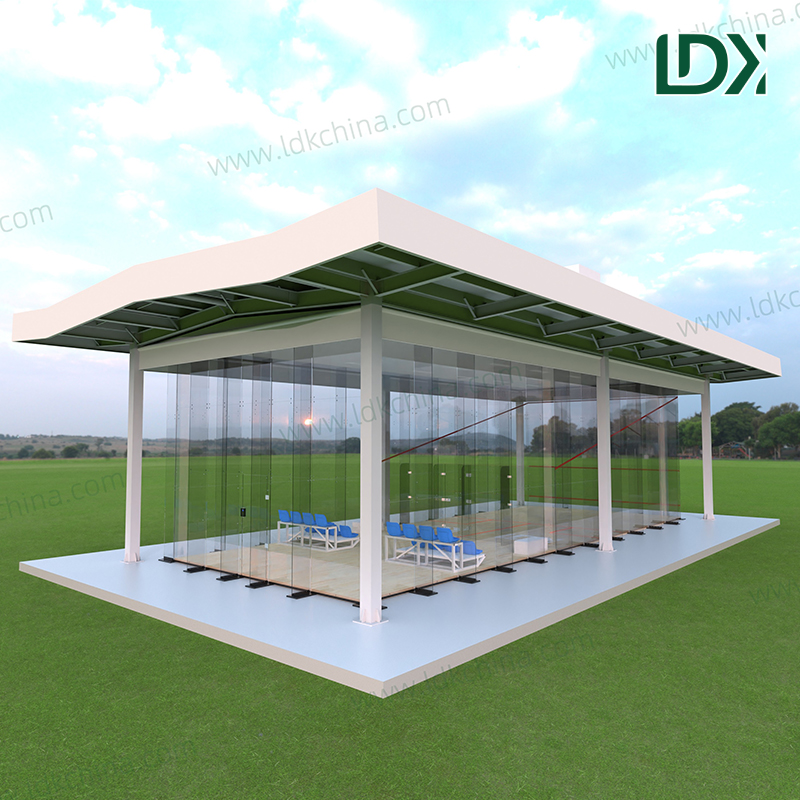
Covered squash courts are purpose-built for outdoor and semi-outdoor locations. They pair 12mm certified tempered glass walls with a heavy-duty Q355 hot-dip galvanized steel main structure and an integrated full roof system, protecting the playing surface from direct sun, rain, and light snow.
Beyond basic shelter, premium covered courts come with integrated features: an electronic sun shade system across all glass walls, face ID access control for entry management, high-grade moisture-resistant wooden flooring, integrated roof lighting, and dedicated spectator seating. The roof structure fully covers the court area while maintaining an open, airy feel.
Best Suited For
• Resort hotels, holiday destinations, and luxury residential communities with outdoor recreation space
• Public sports parks, university campuses, and municipal facilities with available outdoor land
• Projects in mild to warm climates where an indoor building is not cost-justified but weather protection is still required
• Operators looking to create a signature, outdoor sports amenity
Operation & Maintenance
As an outdoor system, covered squash courts require slightly more proactive maintenance to withstand the elements:
• Inspect roof drainage systems seasonally to prevent water pooling and leaks
• Clean glass walls and sun shade mechanisms more frequently to remove dust, pollen, and environmental debris
• Perform annual anti-corrosion checks on galvanized steel frames, especially in coastal or high-humidity areas
• Conduct regular servicing of electrical components (electronic shades, access control, outdoor lighting)
• Maintain wood flooring with moisture-resistant treatments to prevent warping from humidity changes
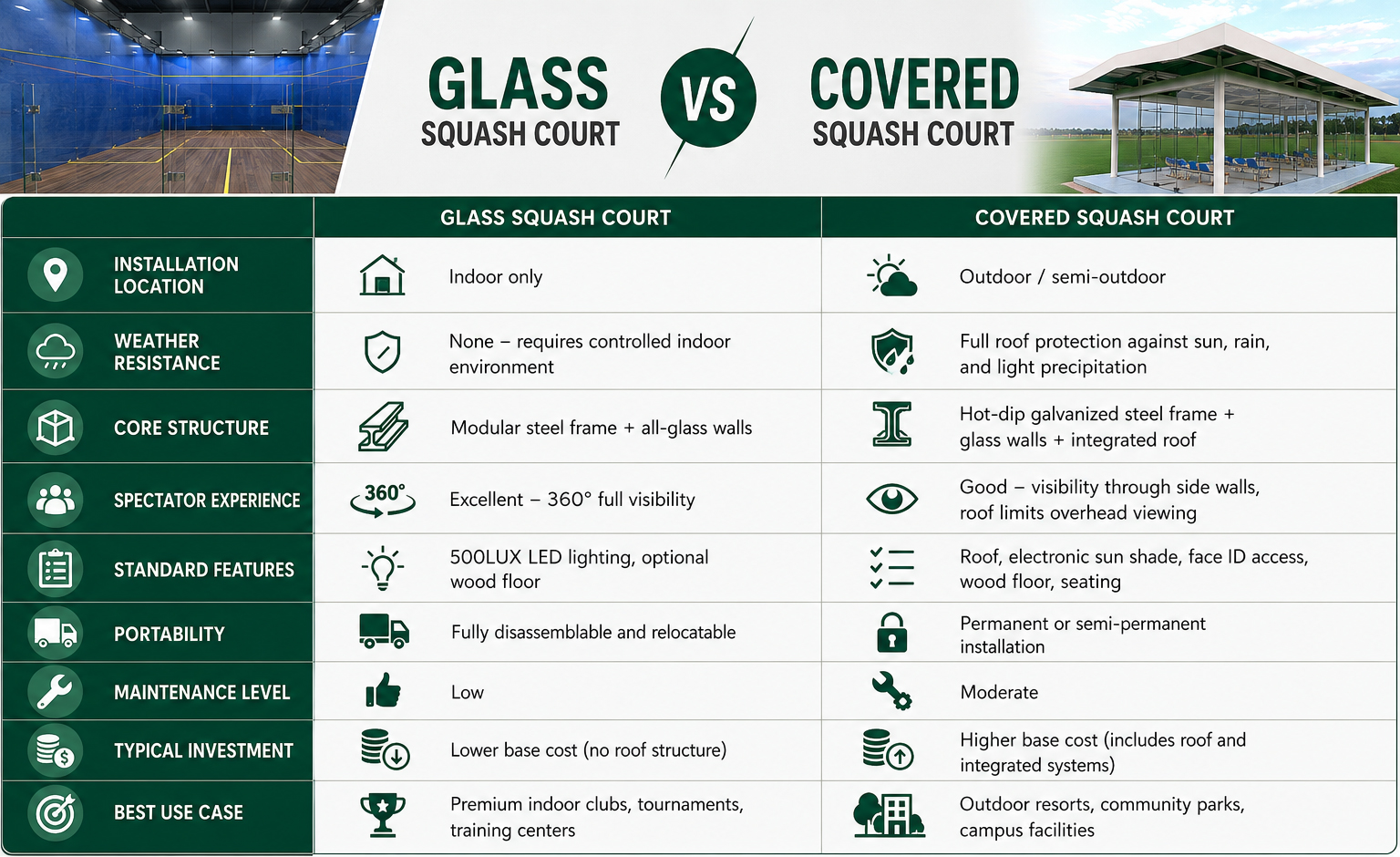
Side-by-Side Comparison
Final Verdict: Which Should You Choose?
There is no universally “better” option – the right choice depends entirely on your project context.
Choose a glass squash court if your venue is indoors, you want to prioritize spectator experience and tournament capability, you value modularity and relocation flexibility, and you want lower long-term maintenance costs. It is the gold standard for professional play and premium indoor branding.
Choose a covered squash court if you have outdoor space available, you need year-round weather protection, you want a self-contained turnkey facility with integrated access control and shading, and you are building for a resort, community, or campus setting where an indoor building is not feasible.
If you are still unsure which system fits your site, budget, and business plan, our technical team can assess your location and provide a customized recommendation.
FAQ
What is a squash court?
A squash court is a rectangular, enclosed room with four vertical walls and a wooden floor where the sport of squash is played. Players use rackets to hit a small rubber ball against the front wall, alternating shots while utilizing all four walls during rallies.
Is squash harder than tennis?
Whether squash is harder than tennis depends on whether you mean physical intensity or technical skill. Squash is widely considered more physically demanding and intense during play, while tennis demands more technical precision, power generation, and endurance over long duration.
Ready to Build Your Ideal Squash Court?
Every project is unique, and the right solution depends on your site, budget, and long-term operational goals. Our team of sports facility experts can review your plans, recommend the optimal court system, and provide a detailed, itemized quotation.
Publisher:
Post time: Aug-26-2026


